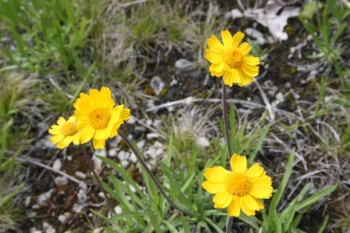
Eastern Fournerved Daisy: A Rare Great Lakes Native Worth Protecting
If you’re passionate about preserving North America’s botanical heritage, the eastern fournerved daisy (Tetraneuris herbacea) might just capture your heart. This unassuming perennial wildflower represents something truly special in the native plant world – a rare survivor from the Great Lakes region that’s fighting to maintain its foothold in an ever-changing landscape.
What Makes This Daisy Special?
Don’t let the humble appearance fool you. The eastern fournerved daisy is a resilient little forb that forms low, spreading rosettes topped with cheerful yellow daisy-like flowers. As a true perennial, it returns year after year, making it a worthwhile investment for the patient gardener. This isn’t your typical roadside wildflower – it’s a botanical treasure with a story to tell.
Where Does It Call Home?
This native beauty has quite the pedigree, being indigenous to both Canada and the lower 48 United States. You’ll find it naturally occurring in:
- Ontario
- Illinois
- Michigan
- Ohio
The eastern fournerved daisy has carved out its niche primarily around the Great Lakes region, where it thrives in the unique conditions found near lakeshores and in alvar ecosystems.
- Species observed
- No observations
A Plant That Needs Our Help
Here’s where things get serious, fellow gardeners. The eastern fournerved daisy carries a Global Conservation Status of S3, meaning it’s considered vulnerable throughout its range. In the United States, it’s actually listed as Threatened. This isn’t a plant you’ll find at your local garden center, and that’s exactly why it needs champions like us.
If you’re considering adding this rare gem to your garden, please – and we cannot stress this enough – only source it from reputable native plant nurseries that propagate their stock responsibly. Never, ever collect plants from wild populations.
Creating the Perfect Home
The eastern fournerved daisy isn’t demanding, but it is particular about certain conditions:
- Sunlight: Full sun is non-negotiable
- Soil: Well-drained, alkaline soils work best
- Water: Drought tolerant once established, but appreciates consistent moisture during establishment
- Climate: Hardy in USDA zones 3-7
Think of it as the strong, silent type – once it settles in, it’s remarkably self-sufficient.
Garden Design Ideas
This low-growing beauty shines in specialized settings:
- Rock gardens where its compact form won’t get lost
- Native plant collections focused on Great Lakes flora
- Restoration projects in appropriate habitats
- Educational gardens highlighting rare species
Its modest stature makes it perfect for front-of-border plantings or as a living mulch around taller native companions.
Supporting Local Wildlife
Like many native daisies, the eastern fournerved daisy serves as a valuable nectar source for native bees and butterflies. Its flowers may be small, but they pack a nutritional punch for pollinators who have co-evolved with this species over thousands of years.
Planting and Care Tips
Success with this rare beauty comes down to mimicking its natural habitat:
- Plant in spring after the last frost
- Ensure excellent drainage – soggy soils are a death sentence
- Skip the fertilizer; this plant prefers lean conditions
- Provide winter protection in the northern parts of its range
- Be patient – establishment can take a full season
The Bottom Line
The eastern fournerved daisy isn’t for every gardener or every garden. It’s a plant for those who understand that sometimes the most valuable additions to our landscapes are the ones that need our protection most. If you have the right conditions and can source it responsibly, growing this rare native is both a privilege and a responsibility.
By cultivating threatened species like the eastern fournerved daisy, we become part of a conservation story that extends far beyond our garden gates. And honestly? There’s something pretty special about knowing you’re helping preserve a piece of North America’s natural heritage, one small yellow flower at a time.