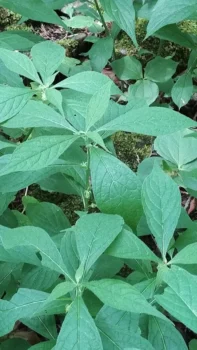
Eastern Green Violet: A Delicate Native Gem for Your Shade Garden
If you’re looking for a subtle, native groundcover that brings quiet charm to shaded corners of your garden, let me introduce you to the Eastern Green Violet (Hybanthus concolor). This unassuming little perennial might not win any flashy flower contests, but it has a special place in the hearts of native plant enthusiasts who appreciate understated elegance.
What Exactly Is Eastern Green Violet?
Don’t let the name fool you – Eastern Green Violet isn’t actually a true violet, despite sharing some family resemblances. This native North American forb (that’s garden-speak for a non-woody perennial plant) belongs to the violet family but marches to its own drummer. You might also see it listed under its former scientific names, including Cubelium concolor or Viola concolor, if you’re browsing older gardening references.
As a perennial forb, Eastern Green Violet lacks significant woody growth above ground, instead returning each year from buds at or below the soil surface. It’s perfectly content to live its low-key life in the dappled shadows of your garden.
Where Does It Call Home?
This charming native has quite an impressive natural range across eastern North America. You’ll find wild populations stretching from southern Canada down through most of the eastern United States, including Alabama, Arkansas, Connecticut, Delaware, Florida, Georgia, Illinois, Indiana, Iowa, Kansas, Kentucky, Maryland, Michigan, Mississippi, Missouri, New Jersey, New York, North Carolina, Ohio, Oklahoma, Pennsylvania, South Carolina, Tennessee, Vermont, Virginia, West Virginia, and Wisconsin – plus Ontario in Canada.
- Species observed
- No observations
A Word of Caution: This Plant Needs Our Help
Here’s where things get serious for a moment. Eastern Green Violet is listed as endangered in New Jersey, where it’s considered extremely rare with a conservation status of S1. If you’re planning to add this beauty to your garden, please – and I cannot stress this enough – only source it from reputable native plant nurseries that propagate their own stock. Never dig it from the wild, and always verify that your plants come from responsibly propagated sources.
What Makes It Worth Growing?
Eastern Green Violet brings several wonderful qualities to your garden:
- Authentic native character: This is the real deal – a true native that supports local ecosystems
- Shade tolerance: Thrives in those tricky spots where many plants struggle
- Low maintenance: Once established, it pretty much takes care of itself
- Wildlife value: Small flowers provide nectar for tiny native bees and flies
- Groundcover potential: Creates a lovely carpet in woodland settings
Where Does It Fit in Your Garden?
Eastern Green Violet is tailor-made for woodland gardens, shade gardens, and naturalized areas. It’s not going to be the star of your front border, but it’s absolutely perfect for:
- Understory plantings beneath trees
- Native plant restoration projects
- Quiet corners of shade gardens
- Woodland edge areas
- Rain gardens (it can handle occasional wet conditions)
Growing Conditions and Care
The good news is that Eastern Green Violet isn’t particularly fussy, as long as you give it what it naturally prefers:
- Light: Partial to full shade (it actually prefers shade!)
- Soil: Moist but well-draining soil rich in organic matter
- Hardiness: Zones 4-8, so it handles cold winters like a champ
- Moisture: Consistent moisture without waterlogging
Its wetland status as Facultative Upland means it usually prefers non-wetland conditions but won’t mind the occasional wet spell – making it quite adaptable to varying moisture levels.
Planting and Care Tips
Getting Eastern Green Violet established is refreshingly straightforward:
- Plant in spring or fall when temperatures are moderate
- Choose a partially shaded spot with rich, organic soil
- Keep soil consistently moist during the first growing season
- Mulch around plants with organic matter like shredded leaves
- Once established, it requires minimal care – just occasional watering during dry spells
The Bottom Line
Eastern Green Violet might not be the showstopper of your garden, but it’s exactly the kind of quiet, steady native that makes ecosystems work. If you have a shaded area that could use a reliable groundcover with authentic native credentials, this little gem deserves serious consideration. Just remember to source it responsibly – our wild populations need all the help they can get.
Sometimes the most valuable plants are the ones that do their work quietly, and Eastern Green Violet is the perfect example of that garden wisdom.