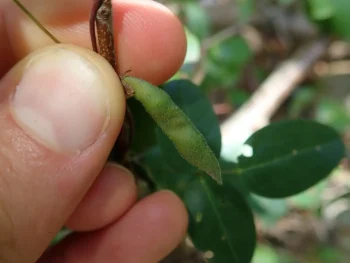
Eastern Milkpea: A Native Groundcover That Works Double Duty
If you’re looking for a native plant that can pull its weight in the garden while supporting local wildlife, let me introduce you to the eastern milkpea (Galactia regularis). This unassuming perennial might not be the showiest plant in your garden, but it’s definitely one of the hardest workers.
What Is Eastern Milkpea?
Eastern milkpea is a native perennial herb that belongs to the legume family. Don’t let the pea in its name fool you into thinking it’ll climb your fence like a garden pea – this plant prefers to sprawl along the ground as a low-growing groundcover. As a forb (basically a fancy term for a non-woody flowering plant), it dies back to the ground each winter and returns reliably each spring.
You might also see this plant listed under its former scientific names, including Galactia glabella, but Galactia regularis is the current accepted name.
Where Does It Grow Naturally?
Eastern milkpea is a true American native, found naturally across much of the southeastern and south-central United States. You’ll find it growing wild in Alabama, Arkansas, Delaware, District of Columbia, Florida, Georgia, Illinois, Kansas, Kentucky, Louisiana, Maryland, Mississippi, Missouri, New Jersey, North Carolina, Oklahoma, Pennsylvania, South Carolina, Tennessee, Texas, and Virginia.
- Species observed
- No observations
Why You Might Want to Plant It
Here’s where eastern milkpea really shines. This little plant offers several compelling reasons to include it in your native landscape:
- Pollinator magnet: The small pink to purple pea-like flowers are beloved by bees, butterflies, and other pollinators
- Soil improvement: As a legume, it actually fixes nitrogen in the soil, making it more fertile for neighboring plants
- Low maintenance: Once established, it’s quite drought tolerant and needs minimal care
- Erosion control: Its sprawling habit makes it excellent for stabilizing slopes or filling in bare spots
- Wildlife support: Seeds provide food for birds and small mammals
Garden Design Ideas
Eastern milkpea isn’t your typical formal garden specimen, but that’s exactly what makes it valuable. It’s perfect for:
- Prairie and meadow gardens where it can weave between other native plants
- Naturalized areas that need a reliable groundcover
- Woodland edges where it can sprawl without overwhelming more delicate plants
- Rain gardens and native plant landscapes
- Difficult slopes that need erosion control
Growing Conditions and Care
One of the best things about eastern milkpea is how accommodating it is. Here’s what it needs to thrive:
- Light: Full sun to partial shade (though it flowers best with more sun)
- Soil: Well-draining soil; not too picky about soil type
- Water: Moderate water when establishing, then quite drought tolerant
- Hardiness: Suitable for USDA zones 6-9
Planting and Care Tips
Getting eastern milkpea established is refreshingly straightforward:
- Plant seeds in spring after the last frost, or start with nursery plants
- Give new plants regular water for the first growing season
- Once established, they’re quite low maintenance
- Plants may self-seed, which is usually welcome in naturalized settings
- Occasional pruning can help control spread if needed
- No fertilizer needed – remember, this plant actually improves soil fertility
The Bottom Line
Eastern milkpea might not win any beauty contests, but it’s the kind of reliable, hardworking native plant that forms the backbone of a successful wildlife garden. If you’re creating habitat for pollinators, need a groundcover for challenging spots, or simply want to include more native plants in your landscape, eastern milkpea deserves serious consideration. It’s proof that sometimes the most valuable garden plants are the ones that quietly do their job while supporting the ecosystem around them.