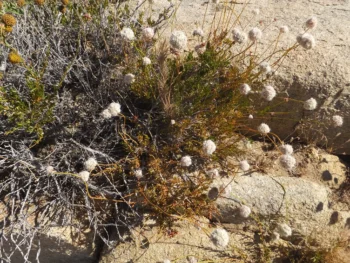
Eastern Mojave Buckwheat: A Drought-Defying Desert Beauty for Your Garden
If you’re looking for a plant that laughs in the face of drought while serving up serious wildlife appeal, let me introduce you to Eastern Mojave buckwheat. This California native shrub might not have the flashiest name, but it’s got the backbone to thrive where other plants throw in the towel.
What Makes Eastern Mojave Buckwheat Special?
Scientifically known as Eriogonum fasciculatum var. flavoviride, this perennial shrub is a true California original. As its common name suggests, it hails from the eastern Mojave Desert region, where it has spent centuries perfecting the art of desert survival. This woody wonder typically grows as a multi-stemmed shrub, usually staying under 13-16 feet tall, making it a perfect fit for residential landscapes.
Where Does It Call Home?
Eastern Mojave buckwheat is exclusively native to California, specifically thriving in the challenging conditions of the eastern Mojave Desert. This native status means it’s perfectly adapted to local climate conditions and supports regional ecosystem health.
- Species observed
- No observations
Why Your Garden (and Local Wildlife) Will Love It
Here’s where this desert darling really shines. During its blooming period, Eastern Mojave buckwheat produces clusters of small, white to pinkish flowers that are absolute magnets for pollinators. Bees, butterflies, and other beneficial insects flock to these nectar-rich blooms, turning your garden into a buzzing hub of activity.
But the benefits don’t stop when the flowers fade. The attractive seed heads that follow provide food for birds, while the shrub’s dense growth offers shelter for small wildlife. It’s like installing a combination restaurant and hotel for your local critters.
Perfect Garden Scenarios
Eastern Mojave buckwheat is tailor-made for:
- Xeriscape and drought-tolerant gardens
- Native plant landscapes
- Desert-themed gardens
- Low-maintenance foundation plantings
- Erosion control on slopes
- Wildlife habitat gardens
Growing Conditions That Make It Happy
This isn’t a high-maintenance plant that demands daily attention. Eastern Mojave buckwheat thrives in USDA hardiness zones 8-10 and has some pretty straightforward preferences:
- Sunlight: Full sun is essential for best growth and flowering
- Soil: Well-draining soil is non-negotiable – this plant despises soggy feet
- Water: Once established, it needs minimal irrigation and can survive on natural rainfall in most areas
- Space: Give it room to spread and show off its natural form
Planting and Care Tips
Getting your Eastern Mojave buckwheat off to a good start is surprisingly straightforward:
- Best planting time: Fall planting allows the roots to establish before the heat of summer
- Watering schedule: Water regularly the first year, then taper off dramatically – overwatering is more dangerous than underwatering
- Pruning: Light pruning after flowering helps maintain shape and encourages fresh growth
- Fertilizing: Skip it – this desert native prefers lean conditions
The Bottom Line
Eastern Mojave buckwheat is the kind of plant that makes gardening feel easy again. It’s drought-tolerant, wildlife-friendly, and perfectly suited to California’s climate challenges. While it might not be the showiest plant in your garden, it’s definitely one of the most reliable and ecologically valuable.
If you’re tired of babying plants that struggle in dry conditions, or if you want to create habitat for local wildlife while reducing your water bill, Eastern Mojave buckwheat deserves a spot on your plant list. Just remember to source it responsibly from reputable native plant nurseries to ensure you’re getting the real deal.