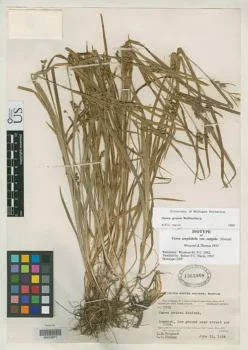
Eastern Narrowleaf Sedge: A Versatile Native for Shade and Moisture
If you’re looking for a low-maintenance native plant that thrives in those tricky spots where grass struggles, let me introduce you to the eastern narrowleaf sedge (Carex amphibola). This unassuming perennial sedge might not win any beauty contests, but it’s the reliable friend your garden has been waiting for—especially in shady, moist areas where other plants throw in the towel.
Getting to Know Eastern Narrowleaf Sedge
Eastern narrowleaf sedge is a native grass-like perennial that forms attractive clumps of narrow, arching green foliage. Don’t let the humble appearance fool you—this sedge is a workhorse in the native plant world. It typically reaches about 2 feet in height and spreads slowly to create dense colonies over time.
You might occasionally see this plant listed under its botanical synonym Carex grisea var. amphibola, but Carex amphibola is the accepted name. While it goes by eastern narrowleaf sedge as its primary common name, it’s sometimes simply called narrowleaf sedge in casual conversation.
Where It Calls Home
This sedge is truly a native success story, naturally occurring across a vast swath of North America. You’ll find it growing wild from southeastern Canada down through most of the eastern and central United States. Its native range includes Alabama, Arkansas, Connecticut, Delaware, Georgia, Illinois, Indiana, Kentucky, Louisiana, Maryland, Massachusetts, Michigan, Mississippi, Missouri, New Hampshire, New Jersey, New York, North Carolina, Ohio, Oklahoma, Pennsylvania, Rhode Island, South Carolina, Tennessee, Texas, Virginia, and West Virginia, plus Ontario, Canada.
- Species observed
- No observations
Why Your Garden Will Love This Sedge
Eastern narrowleaf sedge might not be the showiest plant in your garden, but it brings some serious practical benefits:
- Shade tolerance: Thrives in areas where most grasses fail
- Erosion control: Those spreading roots help hold soil in place
- Low maintenance: Once established, it pretty much takes care of itself
- Wildlife habitat: Provides shelter and structure for small wildlife
- Long-lived: This perennial will be a garden companion for years to come
The Perfect Spot in Your Landscape
Eastern narrowleaf sedge shines in naturalistic gardens and native plant landscapes. It’s particularly valuable in:
- Woodland gardens as groundcover
- Rain gardens and bioswales
- Shaded slopes prone to erosion
- Native plant borders
- Areas with inconsistent moisture
The plant’s semi-erect, bunching growth form creates texture and movement in the landscape without being aggressive or invasive.
Growing Conditions and Care
One of the best things about eastern narrowleaf sedge is how adaptable it is to different moisture conditions. Depending on your region, it can handle both wetland and upland conditions—talk about flexible! Here’s what it prefers:
- Hardiness: Zones 4-9
- Light: Shade tolerant to partial shade
- Soil: Adapts to medium and fine-textured soils
- Moisture: Medium moisture use; varies by region from wetland to upland conditions
- pH: Slightly acidic to neutral (5.9-7.0)
The sedge has moderate drought tolerance once established, but don’t expect it to handle extended dry spells without some supplemental watering.
Planting and Establishment Tips
Eastern narrowleaf sedge can be a bit challenging to source commercially, as it’s not widely available from most nurseries. Your best bet is to check with native plant societies or specialty native plant nurseries.
When you do find plants, here’s how to get them established:
- Timing: Plant in spring or early fall
- Spacing: Allow 12-18 inches between plants for eventual spreading
- Establishment: Keep consistently moist the first year
- Propagation: Can be grown from seed, bare root, or sprigs
Be patient with this one—seedling vigor is low, and the plant has a slow growth rate initially. But once established, it’s there to stay with its long lifespan and moderate spreading habit.
Seasonal Interest
Eastern narrowleaf sedge provides subtle, year-round interest. The active growing period spans spring and summer, when you’ll see the most vibrant green foliage. In late spring, it produces small, inconspicuous green flowers that won’t wow you with color but add to the naturalistic appeal. The brown seeds that follow in summer are equally modest but provide some textural interest.
Don’t expect fall fireworks—this sedge doesn’t put on an autumn color show. The foliage becomes porous in winter, creating an airy texture in the winter landscape.
The Bottom Line
Eastern narrowleaf sedge might not be the star of your garden, but it’s definitely supporting cast material. If you have challenging shady spots with variable moisture, need erosion control, or simply want to add more native plants to your landscape, this reliable sedge deserves consideration. Just remember that patience is key—this slow-and-steady native rewards those who give it time to establish and show its true value in the garden ecosystem.