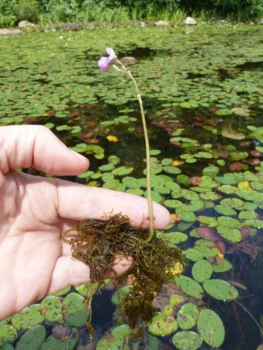
Eastern Purple Bladderwort: A Fascinating Native Aquatic Carnivore for Your Water Garden
If you’re looking to add something truly unique to your water garden or bog, meet the eastern purple bladderwort (Utricularia purpurea). This quirky little native plant is part carnivore, part delicate beauty – and it’s unlike anything else you’ll find at your local nursery.
What Is Eastern Purple Bladderwort?
Eastern purple bladderwort is a fascinating aquatic perennial that’s native to much of eastern North America. Don’t let the name fool you – while it may sound intimidating, this charming plant produces lovely small purple flowers that dance above the water surface on slender stems. The bladderwort part refers to its secret superpower: tiny bladder-like traps that capture microscopic water creatures.
You might also see this plant listed under its scientific name Utricularia purpurea, or the synonym Vesiculina purpurea. As a forb (basically a non-woody flowering plant), it lacks the thick stems of shrubs but makes up for it with its unique aquatic lifestyle.
Where Does It Grow Naturally?
This native beauty has quite an impressive range across North America. You can find eastern purple bladderwort growing naturally in:
- Eastern Canada: New Brunswick, Nova Scotia, Ontario, Quebec, and Newfoundland
- Northeastern US: Maine, New Hampshire, Vermont, Massachusetts, Rhode Island, Connecticut, New York, New Jersey, and Pennsylvania
- Southeastern states: Delaware, Maryland, Virginia, North Carolina, South Carolina, Georgia, Florida, Alabama, Mississippi, Louisiana, and Texas
- Midwest regions: Michigan, Wisconsin, Illinois, Indiana, and Minnesota
- Species observed
- No observations
A Word About Rarity
Before you rush out to find this plant, here’s something important to know: eastern purple bladderwort is considered rare in some areas. In New Jersey, for example, it has a rarity status of S3 (vulnerable) and is listed as a species of concern in the Pinelands and Highlands regions. If you’re interested in growing this plant, please make sure you source it responsibly from reputable native plant nurseries – never collect it from the wild.
Why Grow Eastern Purple Bladderwort?
There are several compelling reasons to consider this unique native for your water feature:
- Supports native ecosystems: As a native plant, it provides habitat and food sources that local wildlife have co-evolved with over thousands of years
- Natural water filtration: Its carnivorous nature means it actually helps keep your water garden clean by consuming microscopic organisms
- Unique conversation starter: How many people can say they have a carnivorous plant in their pond?
- Delicate beauty: The small purple flowers add a subtle, naturalistic touch to water gardens
- Low maintenance: Once established in the right conditions, it pretty much takes care of itself
Perfect Growing Conditions
Eastern purple bladderwort is quite particular about its living arrangements, but once you understand its needs, it’s relatively easy to keep happy:
Water Requirements: This plant is classified as an obligate wetland species across all regions where it grows, meaning it almost always occurs in wetlands. It needs shallow, standing water – think the edges of ponds, bog gardens, or rain gardens that hold water.
Soil and Water Quality: Prefers acidic conditions with a pH between 4.5 and 6.5. Nutrient-poor water is actually ideal, as this plant has adapted to get its nutrients from tiny prey rather than rich soil.
Light: Full sun to partial shade works well, though it tends to flower better with more sunlight.
Climate: Hardy in USDA zones 3-9, making it suitable for most of the continental United States.
How to Grow It Successfully
Growing eastern purple bladderwort successfully is all about recreating its natural wetland habitat:
Planting: This plant doesn’t need traditional planting – it’s free-floating or anchored lightly in shallow water. Simply place it in 6-12 inches of water where it can establish naturally.
Water Management: Maintain consistent water levels and avoid fertilizing the water, as nutrient-rich conditions can actually harm this carnivorous plant.
Seasonal Care: In colder zones, the plant will die back in winter but should return from dormant buds in spring. In warmer areas, it may remain somewhat active year-round.
Companions: Pair it with other native wetland plants like pickerelweed, arrowhead, or native sedges for a naturalistic water garden.
What About Wildlife Benefits?
While eastern purple bladderwort may be small, it plays its part in the ecosystem. The tiny purple flowers attract small pollinators like gnats and small flies, while the plant itself provides habitat structure in aquatic environments. Its presence indicates a healthy, natural wetland ecosystem.
Is This Plant Right for Your Garden?
Eastern purple bladderwort is perfect for you if:
- You have or want to create a water feature
- You’re passionate about native plants and supporting local ecosystems
- You enjoy unique, conversation-starting plants
- You prefer low-maintenance gardening once established
However, it might not be the best choice if you’re looking for a showy display plant or don’t have appropriate aquatic conditions to offer.
This remarkable little native proves that some of the most interesting plants are hiding in plain sight in our wetlands. By giving eastern purple bladderwort a home in your water garden, you’re not just adding a unique carnivorous plant – you’re supporting native biodiversity and connecting your landscape to the broader natural world.