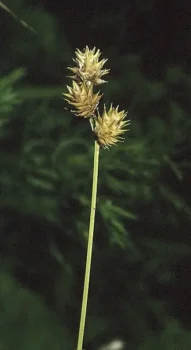
Eastern Straw Sedge: A Native Wetland Wonder for Your Garden
If you’re looking to create a thriving wetland garden or tackle that persistently soggy spot in your yard, eastern straw sedge (Carex straminea) might just be your new best friend. This unassuming native sedge may not win any beauty contests, but it’s absolutely brilliant at what it does – transforming wet, challenging areas into functional, ecologically valuable garden spaces.
What Is Eastern Straw Sedge?
Eastern straw sedge is a perennial grass-like plant that’s actually a true sedge, not a grass. This native beauty belongs to the sedge family and forms neat, bunching clumps that reach about 3 feet tall. Don’t expect showy flowers – this plant keeps things subtle with small, green blooms that appear in late spring. The real charm lies in its fine to medium-textured green foliage that adds a naturalistic touch to wet garden areas.
Where Does It Grow Naturally?
Eastern straw sedge is native to a substantial chunk of the eastern and midwestern United States. You’ll find it naturally occurring across 18 states, from Massachusetts down to North Carolina and west to Wisconsin and Missouri. This includes Connecticut, Delaware, Illinois, Indiana, Kentucky, Maryland, Michigan, New Jersey, New York, Ohio, Pennsylvania, Rhode Island, Virginia, and West Virginia.
- Species observed
- No observations
Why Choose Eastern Straw Sedge?
Here’s where this sedge really shines – it’s what botanists call an obligate wetland plant. That fancy term simply means it almost always grows in wet conditions and absolutely loves them. If you’ve got:
- A rain garden that needs reliable plants
- Soggy areas near ponds or streams
- Low spots that stay moist
- Wetland restoration projects
Then eastern straw sedge is practically begging to help you out. It’s also wonderfully low-maintenance once established, growing at a moderate pace and reaching its mature height without much fuss.
Perfect Garden Situations
Eastern straw sedge isn’t meant for your typical flower border – it has very specific preferences. This plant excels in:
- Rain gardens and bioswales
- Bog gardens and wetland areas
- Pond and stream margins
- Natural or prairie-style landscapes
- Areas with consistent moisture
It’s particularly valuable for naturalized settings where you want that authentic wetland look without the maintenance headaches of fussier plants.
Growing Conditions and Care
The beauty of eastern straw sedge lies in its straightforward needs. Give it what it wants, and it’ll reward you with years of reliable performance:
Soil: This sedge adapts well to fine and medium-textured soils but isn’t happy in coarse, sandy conditions. It can handle acidic to neutral soil (pH 4.7-6.9) but doesn’t appreciate alkaline conditions.
Water: High moisture is non-negotiable. This plant has low drought tolerance, so don’t even think about planting it in dry areas.
Light: While it can tolerate shade, eastern straw sedge performs best with adequate light during its active growing period in spring and summer.
Climate: Hardy in USDA zones 5-9, this sedge can handle temperatures down to -28°F and needs at least 95 frost-free days.
Planting and Propagation
Getting started with eastern straw sedge can be a bit challenging since it’s not commonly available commercially. However, you can propagate it through:
- Seeds (though they’re not abundant and have low vigor)
- Bare root divisions
- Sprigs from established plants
Plant density should be moderate – about 2,700 to 4,800 plants per acre for larger installations. Seeds germinate slowly, and seedlings take their time getting established, so patience is key.
Wildlife and Ecological Benefits
While eastern straw sedge might not be a pollinator magnet (it’s wind-pollinated), it plays an important role in wetland ecosystems. The dense, bunching growth provides habitat structure, and its roots help stabilize wet soils and filter water runoff.
The Bottom Line
Eastern straw sedge isn’t for everyone, and that’s perfectly fine. If you’re dealing with consistently wet conditions and want to work with nature rather than against it, this native sedge could be exactly what you need. It won’t give you flashy flowers or dramatic foliage, but it will give you a reliable, ecologically appropriate solution for challenging wet spots.
Just remember – this is a specialist plant for specialist situations. Don’t try to force it into typical garden beds, but do consider it when you’re designing rain gardens, wetland areas, or other moisture-loving plant communities. Your local ecosystem (and your maintenance schedule) will thank you for it.