Eastern Woodland Sedge: A Quietly Beautiful Native Groundcover
If you’re looking for a low-maintenance native plant that thrives in those tricky shady spots where grass struggles, eastern woodland sedge (Carex blanda) might just become your new best friend. This unassuming perennial sedge has been quietly carpeting North American woodlands for centuries, and it’s ready to bring that same understated elegance to your garden.
What Makes Eastern Woodland Sedge Special?
Eastern woodland sedge is a true North American native, calling both Canada and the lower 48 states home. You’ll find this adaptable plant growing naturally from Maine to Florida and as far west as Wyoming and New Mexico. It’s established populations in an impressive 41 states plus Manitoba, Ontario, and Quebec, proving its remarkable adaptability to diverse growing conditions.
- Species observed
- No observations
Don’t let the name sedge fool you into thinking this is just another boring grass. While sedges are indeed grass-like plants, eastern woodland sedge brings its own unique charm to the garden with fine-textured, arching green foliage that forms neat, well-behaved clumps.
Garden Appeal and Landscape Role
Eastern woodland sedge grows to a mature height of about 2 feet, creating an erect, bunching growth form that works beautifully as:
- Groundcover in shaded areas where traditional turf grass fails
- Erosion control on slopes and banks
- Naturalized plantings in woodland gardens
- Rain garden plantings (thanks to its facultative wetland status)
- Low-maintenance borders and edges
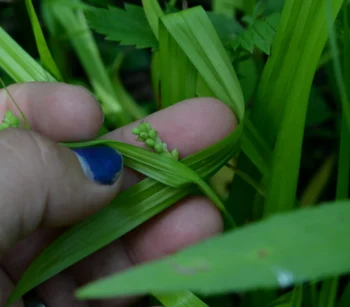
The plant produces inconspicuous green flowers in spring, followed by small brown seeds. While it won’t stop traffic with showy blooms, its consistent, fine-textured foliage provides an excellent backdrop for more colorful native wildflowers and ferns.
Growing Conditions and Care
One of eastern woodland sedge’s greatest strengths is its adaptability. This hardy perennial thrives in USDA hardiness zones 3-8, tolerating winter temperatures as low as -28°F. Here’s what it needs to flourish:
Soil Requirements:
- Adapts to fine and medium-textured soils
- Prefers slightly acidic to neutral pH (4.4-7.0)
- Medium fertility requirements
- High moisture tolerance but low drought tolerance
Light and Water:
- Shade tolerant – perfect for those dim corners of your yard
- High moisture use – loves consistent water
- High anaerobic tolerance makes it suitable for occasionally waterlogged areas
Planting and Establishment
Eastern woodland sedge is routinely available from native plant suppliers, so you shouldn’t have trouble sourcing it. You can establish it through:
- Bare root plants
- Seed (though seedling vigor is low, so be patient)
- Sprigs or divisions
Fair warning: this isn’t a plant for impatient gardeners. Eastern woodland sedge has a slow growth rate and low seedling vigor, meaning it takes time to establish. But once settled in, it requires minimal care and has a moderate lifespan that will reward your patience.
Plant density should be 2,700 to 4,800 plants per acre for large-scale installations, though most home gardeners will be planting individual clumps or small groups.
Wildlife and Ecological Benefits
While eastern woodland sedge is wind-pollinated and doesn’t attract butterflies like showy wildflowers do, it still provides ecological value. Sedges support various insects and provide cover for small wildlife. The seeds, though produced in low abundance, offer food for birds and small mammals.
The Verdict: Should You Plant It?
Eastern woodland sedge is an excellent choice for gardeners who:
- Want to support native ecosystems
- Need groundcover for challenging shady, moist areas
- Prefer low-maintenance plants
- Are creating naturalized or woodland gardens
- Want erosion control on slopes
It might not be the right fit if you’re looking for quick results or showy flowers. But for patient gardeners who appreciate subtle beauty and ecological function, eastern woodland sedge offers years of quiet, dependable performance in some of the garden’s most challenging spots.
Sometimes the best garden plants are the ones that simply do their job without making a fuss – and eastern woodland sedge does exactly that, bringing a touch of authentic North American woodland to your landscape.