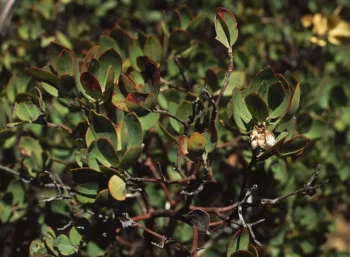
Eastwood’s Manzanita: A California Native That’s Worth the Wait
If you’re looking for a drought-tolerant shrub that practically screams California charisma, let me introduce you to Eastwood’s manzanita (Arctostaphylos glandulosa). This native beauty might just be the low-maintenance garden companion you’ve been searching for – though it comes with a few quirky personality traits you’ll want to know about first.
What Makes Eastwood’s Manzanita Special
Eastwood’s manzanita is a perennial shrub that typically grows 4-13 feet tall, though it can sometimes reach up to 16 feet under the right conditions. What really sets this plant apart is its stunning architecture: multiple stems arise from the base, creating a naturally sculptural form that looks gorgeous year-round. The smooth, reddish bark practically glows in the garden, especially when backlit by morning or evening sun.
From late winter to early spring, clusters of small, bell-shaped flowers appear in shades of white to pink. These blooms aren’t just pretty – they’re absolutely buzzing with activity from native bees, butterflies, and hummingbirds. Later in the season, small red berries follow, providing food for local wildlife.
Where It Calls Home
This manzanita species is native to California and southern Oregon, where it thrives in chaparral communities and oak woodlands. As a true native of the lower 48 states, it’s perfectly adapted to the Mediterranean climate patterns of the West Coast.
- Species observed
- No observations
Why Your Garden Will Love It (And Why You Might Too)
Here’s where Eastwood’s manzanita really shines: once established, it’s incredibly drought tolerant. We’re talking forget to water it for months and it’ll still look fabulous levels of self-sufficiency. This makes it perfect for:
- Xeriscaped gardens and water-wise landscaping
- Native plant gardens
- Mediterranean-style landscapes
- Slope stabilization (those roots really know how to hold soil)
- Wildlife habitat gardens
The plant works beautifully as a specimen shrub, in mixed native plantings, or even as an informal hedge. Its evergreen nature means your garden gets year-round structure and interest.
Growing Conditions and Care
Eastwood’s manzanita is hardy in USDA zones 7-10 and has some specific preferences you’ll want to respect:
Light: Full sun to partial shade, though it performs best with morning sun and some afternoon protection in hotter climates.
Soil: Well-draining soil is absolutely crucial. This plant cannot tolerate waterlogged conditions, especially during summer. Sandy or rocky soils work wonderfully.
Water: Here’s the quirky part – once established, summer watering near the trunk can actually harm or kill the plant. This is a classic California native trait. Water deeply but infrequently, and keep irrigation away from the base.
Planting and Care Tips
The best time to plant Eastwood’s manzanita is in fall, giving it a full rainy season to establish before facing its first summer. Here are some tips for success:
- Plant in fall for best establishment
- Dig a wide planting hole (twice the width of the root ball)
- Don’t amend heavy clay soils – instead, plant on a mound or slope
- Mulch around the plant but keep mulch away from the trunk
- Water regularly the first year, then reduce watering significantly
- Avoid fertilizers – these plants prefer lean soil
Wildlife and Pollinator Benefits
One of the best reasons to grow Eastwood’s manzanita is its value to local ecosystems. The early flowers provide nectar when few other plants are blooming, making it a crucial food source for emerging pollinators. Native bees especially love manzanita flowers, and hummingbirds are frequent visitors too.
The berries that follow feed various bird species, and the dense branching structure provides nesting sites and shelter for small birds and other wildlife.
The Bottom Line
Eastwood’s manzanita isn’t a plant for gardeners who like to fuss and fidget. It’s for those who appreciate natural beauty, want to support local wildlife, and understand that sometimes the best care is knowing when to step back and let nature do its thing. If you can provide good drainage and resist the urge to overwater, you’ll be rewarded with a stunning, low-maintenance shrub that connects your garden to California’s natural heritage.
Just remember: patience is key. Like many natives, manzanitas can be slow to establish, but once they’re happy, they’re in it for the long haul – sometimes living for decades with minimal care.