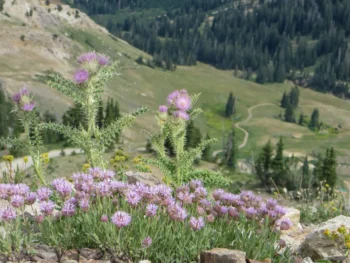
Eaton’s Thistle: A Spiky Native Beauty for Western Gardens
If you’re looking to add some wild, untamed beauty to your western garden while supporting local wildlife, Eaton’s thistle (Cirsium eatonii) might just be your new best friend. Sure, it’s got spines that mean business, but this native wildflower brings so much charm and ecological value that you’ll quickly forgive its prickly personality.
What Makes Eaton’s Thistle Special?
Eaton’s thistle is a true western native, calling the mountainous regions of Colorado, Idaho, Montana, Nevada, Utah, and Wyoming home. As a biennial to short-lived perennial forb, this hardy plant has adapted beautifully to the challenging conditions of high-elevation landscapes.
The plant produces stunning purple to pink flower heads that are typically 1-2 inches across, blooming from summer into early fall. These nectar-rich blooms sit atop stems that can reach 2-4 feet tall, making quite the statement in any garden. The deeply lobed, spiny leaves have a distinctive woolly underside that helps the plant conserve moisture – a clever adaptation for its native dry mountain environments.
- Species observed
- No observations
Why Your Garden (and Local Wildlife) Will Love It
Here’s where Eaton’s thistle really shines: it’s a pollinator magnet! Butterflies, bees, and other beneficial insects absolutely adore those showy purple blooms. The flowers provide an excellent source of nectar during the crucial late-summer period when many other wildflowers are winding down.
Beyond pollinators, the seeds attract goldfinches and other small birds, while the plant structure can provide shelter for beneficial insects. It’s like installing a wildlife diner and hotel in your backyard.
Growing Conditions and Care
One of the best things about Eaton’s thistle is how low-maintenance it can be once established – if you give it what it wants:
- Sunlight: Full sun is essential for best growth and flowering
- Soil: Well-drained soils are crucial; it actually prefers alkaline conditions
- Water: Drought tolerant once established, but appreciates occasional deep watering
- Climate: Hardy in USDA zones 3-7, perfect for mountain and high-elevation gardens
Planting and Propagation Tips
Growing Eaton’s thistle from seed is your best bet, and timing matters. Direct sow seeds in fall for natural cold stratification over winter, or you can cold-stratify seeds in your refrigerator for 30-60 days before spring planting.
Once established, this thistle often self-seeds readily, so you might find pleasant surprises popping up around your garden. If you prefer more control, simply deadhead spent flowers before they go to seed.
Garden Design Ideas
Eaton’s thistle works beautifully in:
- Native plant and wildflower gardens
- Xeriscaping projects
- Naturalized meadow areas
- Wildlife habitat gardens
- Mountain-style landscapes
Pair it with other western natives like penstemon, Indian paintbrush, or native grasses for a stunning, low-water landscape that celebrates your region’s natural heritage.
A Word of Caution (and Encouragement)
Yes, this is a thistle, and yes, it has spines. But don’t let that scare you off! With proper placement away from high-traffic areas and a pair of good gardening gloves, you can safely enjoy this native beauty. The ecological benefits and stunning flowers far outweigh the occasional prick.
Plus, when you plant native species like Eaton’s thistle, you’re participating in conservation efforts and creating habitat for wildlife that has co-evolved with these plants over thousands of years. That’s gardening with purpose!
The Bottom Line
Eaton’s thistle isn’t for every garden or every gardener, but if you’re in its native range and looking to create habitat while adding dramatic, wild beauty to your landscape, this spiky native deserves serious consideration. It’s tough, beautiful, and ecologically valuable – what more could you ask for in a native plant?