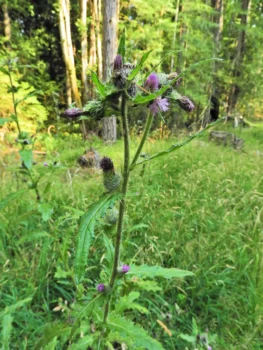
Edible Thistle: A Native Beauty That Deserves a Second Look
When most gardeners hear the word thistle, they probably think of prickly weeds taking over their carefully tended beds. But hold on—let me introduce you to edible thistle (Cirsium edule), a native North American wildflower that might just change your mind about this misunderstood plant family.
What Exactly Is Edible Thistle?
Edible thistle, botanically known as Cirsium edule, is a biennial or perennial forb native to western North America. Unlike its weedy cousins, this thistle is a valuable native plant that plays an important role in natural ecosystems. You might also see it listed under several botanical synonyms including Carduus macounii, Cirsium hallii, or Cirsium macounii in older references.
As a forb, this plant lacks woody tissue and produces its perennating buds at or below ground level, helping it survive harsh winters and return each growing season.
Where Does It Call Home?
This hardy native has quite an impressive range! Edible thistle naturally grows from Alaska down through British Columbia and into the northwestern United States, including Idaho, Oregon, and Washington. It’s truly a plant of the greater Pacific Northwest and northern regions.
- Species observed
- No observations
Why Consider Adding It to Your Garden?
You might be wondering why anyone would intentionally plant a thistle. Here are some compelling reasons:
- Pollinator magnet: The purple-pink flower heads are absolute bee and butterfly magnets, providing crucial nectar for native pollinators
- Native authenticity: Supporting local ecosystems by growing truly native plants
- Low maintenance: Once established, it requires minimal care
- Unique texture: Adds interesting architectural form to naturalized areas
- Historical significance: Indigenous peoples traditionally used parts of this plant for food
What Does It Look Like?
Edible thistle can reach 3-6 feet tall, creating quite a presence in the garden. The distinctive purple-pink flower heads bloom atop spiny stems, and while yes, it does have thorns, they’re part of its natural charm. The overall effect is bold and wild—perfect for gardeners who appreciate plants with personality.
Perfect Garden Settings
This isn’t a plant for formal perennial borders, but it absolutely shines in:
- Native plant gardens
- Wildlife and pollinator gardens
- Naturalized meadow areas
- Prairie-style plantings
- Low-maintenance wildflower gardens
Growing Conditions and Care
One of the best things about edible thistle is its adaptability. This plant has facultative wetland status across its range, meaning it can thrive in both wetland and non-wetland conditions—talk about flexibility!
Sunlight: Full sun to partial shade
Soil: Tolerates various soil types, from moist to moderately dry
Hardiness: USDA zones 3-8
Water needs: Moderate; drought tolerant once established
Planting and Establishment Tips
Getting edible thistle started in your garden is refreshingly straightforward:
- Direct seed in fall for natural cold stratification
- Seeds need cold treatment to germinate properly
- Choose a location where it can spread naturally without overwhelming other plants
- Be patient—as a biennial/perennial, it may take time to establish
- Once happy, it often self-seeds for future generations
A Word of Caution (The Good Kind)
While edible thistle isn’t invasive or noxious, remember that it is a thistle with natural defenses. Plant it where you won’t accidentally brush against it, and always wear gloves when handling. Also, give it space to do its thing—this isn’t a plant that plays well with delicate neighbors.
The Bottom Line
If you’re looking to support native wildlife, add authentic regional character to your landscape, and grow something truly unique, edible thistle deserves serious consideration. It’s not for every garden or every gardener, but for those who appreciate native plants with bold personalities, it can be a wonderful addition to the right setting.
Just remember: this is a plant that knows what it wants and isn’t afraid to take up space. Give it room to shine, and it’ll reward you with years of pollinator-attracting blooms and authentic native beauty.