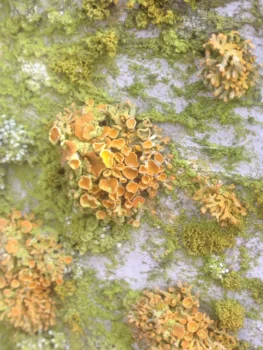
Discovering Edrudia Lichen: A Tiny Natural Wonder in Your Landscape
Have you ever noticed small, crusty patches growing on rocks or tree bark in your yard and wondered what they were? You might have encountered edrudia lichen (Edrudia constipans), a fascinating organism that’s neither plant nor animal, but something wonderfully unique in between.
What Exactly Is Edrudia Lichen?
Edrudia lichen is what scientists call a composite organism – it’s actually a partnership between a fungus and algae working together in perfect harmony. This remarkable collaboration creates those small, often overlooked patches you might spot around your property. Previously known by the scientific synonym Caloplaca constipans, this lichen is native to North America and represents one of nature’s most successful partnerships.
Unlike traditional plants, lichens don’t have roots, stems, or leaves. Instead, they form crusty, scale-like growths that attach directly to surfaces like rocks, tree bark, or even concrete structures.
Where You’ll Find Edrudia Lichen
As a North American native, edrudia lichen has established itself across various regions of the continent. While specific distribution details vary, these hardy organisms typically appear wherever suitable growing surfaces and environmental conditions align.
Is Edrudia Lichen Beneficial for Your Garden?
While you can’t plant edrudia lichen like you would a flower or shrub, its presence in your landscape is actually quite beneficial:
- **Natural air quality indicators**: Lichens are sensitive to air pollution, so their presence suggests good air quality in your area
- **Ecosystem support**: They provide food and habitat for small insects and other tiny creatures
- **Soil building**: Over time, lichens help break down rock surfaces, contributing to soil formation
- **Low-maintenance beauty**: They add subtle texture and color to natural surfaces without any care required
How to Identify Edrudia Lichen
Spotting edrudia lichen requires a close look, as these organisms are typically quite small:
- Look for crusty, scale-like patches on rock surfaces or tree bark
- The growth pattern is usually flat and closely adhered to the surface
- Colors can vary but often appear in muted tones of gray, yellow, or orange
- Unlike moss, lichens feel dry and crusty rather than soft and spongy
- They’re most noticeable during dry conditions when their texture becomes more apparent
Appreciating Rather Than Cultivating
Here’s the thing about lichens – they’re not something you can simply plant and tend like your favorite perennials. These remarkable organisms establish themselves naturally when conditions are right, and they grow incredibly slowly, sometimes taking years to develop visible patches.
Instead of trying to cultivate edrudia lichen, the best approach is to appreciate it when it appears naturally in your landscape. Avoid scraping it off surfaces where it’s not causing harm, as you’re witnessing a fascinating natural process that’s been perfected over millions of years.
Creating Lichen-Friendly Spaces
While you can’t plant lichens directly, you can create conditions that welcome them:
- Leave natural rock surfaces undisturbed
- Avoid using harsh chemicals or pressure washing on stone features
- Maintain good air quality around your property
- Allow some areas of your landscape to remain wild and undisturbed
The next time you’re strolling through your garden or exploring natural areas, take a moment to look closely at those seemingly bare rock surfaces. You might just discover the quiet beauty of edrudia lichen – a testament to nature’s incredible ability to find partnership and thrive in the most unexpected places.