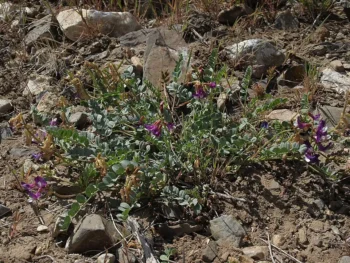
Egg Milkvetch: A Tough Little Native for Water-Wise Gardens
If you’re looking for a hardy, drought-tolerant native plant that won’t demand constant attention, egg milkvetch (Astragalus oophorus) might just be your new garden buddy. This unassuming perennial proves that sometimes the most resilient plants come in modest packages.
What is Egg Milkvetch?
Egg milkvetch is a native perennial that calls the southwestern United States home. Don’t let its humble appearance fool you – this little trooper has been thriving in some pretty harsh conditions long before any of us thought about water-wise gardening. As part of the legume family, it’s got that classic pea-flower look that pollinators absolutely love.
Where Does It Grow Naturally?
This southwestern native has made itself at home across Arizona, California, Colorado, Nevada, and Utah. It’s perfectly adapted to the challenges of these regions – from scorching summers to unpredictable rainfall patterns.
- Species observed
- No observations
Why Consider Egg Milkvetch for Your Garden?
Here’s where egg milkvetch really shines:
- Drought champion: Once established, it barely needs any supplemental watering
- Pollinator magnet: Those small purple to pink flowers are bee candy
- Low maintenance: Perfect for gardeners who want beauty without the fuss
- Native credentials: Supporting local ecosystems while reducing water use
- Versatile placement: Works great in rock gardens, xeriscapes, or as natural ground cover
What Does It Look Like?
Egg milkvetch keeps things simple and elegant. You’ll see compound leaves that look delicate but are surprisingly tough, topped with clusters of small purple to pink pea-like flowers. The whole plant stays relatively low to the ground, making it perfect for filling in spaces without overwhelming neighboring plants.
Perfect Garden Homes
This plant absolutely loves:
- Rock gardens where it can nestle between stones
- Xeriscape designs focused on water conservation
- Native plant gardens celebrating regional flora
- Desert landscaping schemes
- Any spot where you want color without constant care
Growing Conditions That Make It Happy
Egg milkvetch isn’t picky, but it does have preferences:
- Sunlight: Full sun is where it truly thrives
- Soil: Well-draining sandy or rocky soils are perfect
- Water: Drought tolerant once established – overwatering is more harmful than underwatering
- Climate: Hardy in USDA zones 4-8
Planting and Care Tips
Getting egg milkvetch established is refreshingly straightforward:
- Timing: Plant in fall or early spring for best results
- Spacing: Give plants room to spread naturally
- Initial care: Water regularly the first season, then step back and let it do its thing
- Ongoing maintenance: Minimal! Just avoid overwatering and enjoy the show
The Bottom Line
Egg milkvetch might not be the showiest plant in the garden center, but it’s exactly what many modern gardens need. It’s a reliable native that supports local pollinators while asking very little in return. If you’re building a water-wise landscape or just want a plant that won’t guilt-trip you for forgetting to water, this southwestern native deserves a spot on your list.
Sometimes the best garden additions are the ones that quietly do their job while you focus on the more demanding plants. Egg milkvetch is definitely one of those garden heroes.