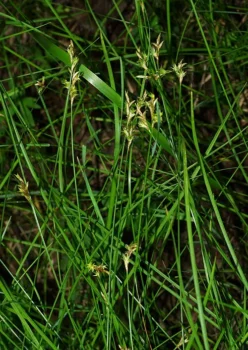
Eggbract Sedge: A Hardy European Import for North American Gardens
Meet the eggbract sedge (Carex ovalis), a tough little grass-like plant that’s made quite a journey from its European homeland to gardens across North America. While it might not be a native favorite, this adaptable perennial has some interesting qualities that make it worth considering for certain garden situations.
What Exactly Is Eggbract Sedge?
Eggbract sedge is a perennial sedge that belongs to the Cyperaceae family – think of it as a cousin to your lawn grass, but with a bit more character. You might also encounter it under the scientific synonyms Carex leporina or Carex tracyi in older gardening references, though these names aren’t quite accurate.
This clump-forming sedge creates tidy tufts of narrow, arching green leaves topped with distinctive oval-shaped seed heads that give the plant its common name. It’s what botanists call a graminoid – basically a fancy term for grass-like plant.
Where You’ll Find It Growing Wild
Originally from Europe and western Asia, eggbract sedge has established itself across a surprising range of North American locations. You can find it growing wild in states from coast to coast, including California, Oregon, and Washington on the west side, and Maine, Massachusetts, New Hampshire, New York, North Carolina, Pennsylvania, Tennessee, Vermont, and Wisconsin on the east. It’s also made itself at home in several Canadian provinces, including British Columbia, New Brunswick, Nova Scotia, Prince Edward Island, Quebec, and Newfoundland.
- Species observed
- No observations
The Garden Appeal (Or Lack Thereof)
Let’s be honest – eggbract sedge isn’t going to win any beauty contests. This is a plant that’s all about function over form. It creates neat, low-growing clumps that work well as ground cover in naturalized areas or for erosion control on slopes. The oval seed heads provide some textural interest, but you’re not planting this one for showstopping blooms.
Where It Likes to Live
One of eggbract sedge’s best qualities is its adaptability. This plant has a facultative wetland status across most regions, meaning it’s equally happy in wet spots and drier locations. Whether you have a soggy corner of your yard or a well-drained hillside, this sedge can probably handle it.
It thrives in USDA hardiness zones 3-8, making it suitable for most temperate North American climates. The plant prefers full sun to partial shade and isn’t particularly fussy about soil types.
Growing Eggbract Sedge Successfully
If you decide to give eggbract sedge a try, here’s what you need to know:
- Plant in spring or fall for best establishment
- Space plants 12-18 inches apart for ground cover
- Water regularly during the first growing season
- Once established, it’s quite drought tolerant
- Minimal fertilization needed – this plant prefers lean conditions
- Cut back in late winter if desired, though it’s not necessary
Fair warning: eggbract sedge can self-seed readily, so you might find new plants popping up in unexpected places. While it’s not considered invasive, it can spread if conditions are to its liking.
Wildlife and Ecosystem Considerations
As a wind-pollinated plant, eggbract sedge doesn’t offer much in the way of pollinator support. Birds may occasionally use the seeds as food, but overall, its wildlife benefits are limited compared to native alternatives.
Should You Plant It?
Eggbract sedge occupies an interesting middle ground in the gardening world. It’s not native, but it’s also not problematic enough to avoid entirely. If you need a tough, low-maintenance ground cover for a challenging spot and don’t mind its modest appearance, it could work for you.
However, if you’re interested in supporting local ecosystems and native wildlife, consider exploring native sedge alternatives like Pennsylvania sedge (Carex pensylvanica) or prairie dropseed (Sporobolus heterolepis). These native options will provide similar function while offering greater benefits to local birds, insects, and other wildlife.
The Bottom Line
Eggbract sedge is like that reliable friend who’s not the most exciting person at the party but will always be there when you need them. It’s hardy, adaptable, and low-maintenance – qualities that have served it well in its journey from European meadows to North American gardens. While it won’t transform your landscape into a showstopper, it might just be the practical solution you need for that tricky spot where other plants have failed.