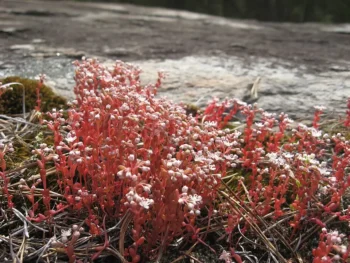
Elf Orpine: A Tiny Native Gem for Challenging Garden Spots
Meet elf orpine, a delightfully diminutive native succulent that proves good things really do come in small packages. This charming annual might be tiny, but it packs a big punch when it comes to solving some of your garden’s trickiest challenges.
What Makes Elf Orpine Special?
Elf orpine (Diamorpha smallii) is a native annual forb that belongs to the stonecrop family. Don’t let its small stature fool you – this little plant is tough as nails and perfectly adapted to thrive where other plants struggle. As an annual, it completes its entire life cycle in one growing season, but don’t worry about replanting – it’s excellent at reseeding itself!
You might also encounter this plant listed under its scientific synonyms, including Sedum smallii or Diamorpha cymosa, but they’re all referring to the same wonderful little native.
Where Does Elf Orpine Call Home?
This southeastern native has made itself at home across Alabama, Georgia, North Carolina, South Carolina, Tennessee, and Virginia. It’s perfectly adapted to the unique growing conditions found throughout these states, making it an excellent choice for gardeners looking to incorporate truly local flora into their landscapes.
- Species observed
- No observations
Why Your Garden Will Love Elf Orpine
Elf orpine is like that friend who’s always there when you need them most – reliable, undemanding, and surprisingly helpful. Here’s why this little native deserves a spot in your garden:
- Perfect for problem areas with shallow, rocky, or poor soil
- Requires virtually no maintenance once established
- Provides early-season nectar for small pollinators and beneficial insects
- Creates attractive ground-covering mats with seasonal color changes
- Excellent for rock gardens, green roofs, and xerophytic plantings
- Self-seeds readily, ensuring future generations
The Aesthetic Appeal
While elf orpine may be small, it’s definitely mighty in the looks department. This succulent forms dense, colorful mats that change with the seasons. In spring, it produces clusters of tiny white to pinkish flowers that may be small individually but create a lovely carpet effect when viewed together. As the season progresses into fall and winter, the entire plant takes on beautiful reddish hues, adding unexpected color to the garden during quieter months.
Perfect Garden Settings
Elf orpine shines brightest in specialized garden settings where its unique talents can be fully appreciated:
- Rock gardens: Its ability to thrive in shallow soil makes it perfect for tucking into crevices
- Native plant gardens: A must-have for authentic southeastern native plantings
- Drought-tolerant landscapes: Once established, it rarely needs supplemental watering
- Green roofs: Its shallow root system and drought tolerance make it ideal for extensive green roof systems
- Challenging slopes: Helps stabilize soil while requiring minimal inputs
Growing Conditions and Care
One of elf orpine’s greatest strengths is its ability to thrive in conditions that would stress many other plants. Here’s what this adaptable native prefers:
- Sunlight: Full sun to partial shade (more sun generally means better flowering)
- Soil: Well-draining sandy or rocky soils; actually prefers poor, shallow soils
- Water: Drought-tolerant once established; avoid overwatering
- USDA Zones: Hardy in zones 6-9
Special Considerations: Wetland Status
Interestingly, despite its drought tolerance, elf orpine has a facultative wetland status in both the Atlantic and Gulf Coastal Plain and Eastern Mountains and Piedmont regions. This means it usually occurs in wetlands but can also thrive in non-wetland conditions – talk about versatility! This adaptability makes it an excellent choice for rain gardens or areas with variable moisture levels.
Planting and Care Tips
The beauty of elf orpine lies in its simplicity. Here’s how to successfully grow this native gem:
- Starting out: Sow seeds in fall or early spring directly where you want them to grow
- Soil preparation: Less is more – avoid rich, heavily amended soils that can cause problems
- Watering: Water gently until germination, then let nature take over
- Maintenance: Virtually none required! Let plants self-seed for continuous coverage
- Fertilizing: Skip it – this plant thrives on neglect
Supporting Local Ecosystems
By choosing elf orpine, you’re not just solving a gardening challenge – you’re also supporting local wildlife. Its early spring flowers provide nectar when few other plants are blooming, making it valuable for small native bees, beneficial insects, and other early-season pollinators. As a native plant, it fits naturally into local food webs and ecological relationships.
Is Elf Orpine Right for Your Garden?
Elf orpine is perfect for gardeners who:
- Have challenging spots with poor, shallow, or rocky soil
- Want low-maintenance native plants
- Are creating drought-tolerant landscapes
- Need ground cover for specialized applications like green roofs
- Appreciate subtle beauty and seasonal interest
- Want to support native pollinators and beneficial insects
This little native proves that sometimes the most unassuming plants can be the most valuable additions to our gardens. Elf orpine may be small, but its ability to thrive where others fail makes it a true garden hero worth celebrating.