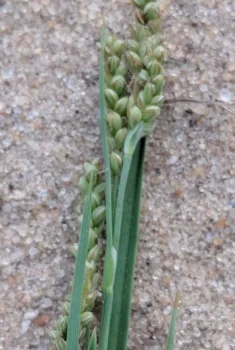
Elk Sedge: A Hardy Native Groundcover for Wet Gardens
If you’re looking for a tough, low-maintenance native plant that thrives in those soggy spots where other plants struggle, elk sedge might just be your new best friend. This unassuming but resilient perennial sedge has been quietly carpeting wetlands and meadows across northern North America for centuries, and it’s ready to bring that same dependable charm to your garden.
What is Elk Sedge?
Elk sedge (Carex garberi) is a perennial grass-like plant that belongs to the sedge family. Don’t let the grass-like description fool you into thinking it’s ordinary—sedges are actually quite different from true grasses and often much more interesting! This particular species forms dense, neat tufts of narrow, arching green leaves that create a fine-textured carpet effect in the landscape.
You might occasionally see this plant listed under its scientific synonyms, including Carex garberi var. bifaria, but rest assured—they’re all referring to the same hardy little sedge.
Where Does Elk Sedge Come From?
This is truly a plant of the north! Elk sedge is native across an impressively wide range that includes Alaska, much of Canada, and extends down into the northern United States. You’ll find it naturally occurring in states and provinces from coast to coast, including:
- Alaska and western Canada (British Columbia, Alberta, Saskatchewan, Manitoba, Yukon, Northwest Territories, Nunavut)
- Eastern Canada (Ontario, Quebec, New Brunswick, Labrador)
- Northern U.S. states (Maine, New Hampshire, Vermont, New York, Pennsylvania, Ohio, Michigan, Indiana, Illinois, Wisconsin, Minnesota, North Dakota, Montana, Wyoming)
- Western states (Washington, Oregon, California)
- Species observed
- No observations
Why Grow Elk Sedge?
There are several compelling reasons to consider adding elk sedge to your landscape:
It loves wet feet: Across all regions where it grows, elk sedge has a Facultative Wetland status, meaning it usually occurs in wetlands but can tolerate some drier conditions. This makes it perfect for those challenging wet spots in your yard where other plants might rot or struggle.
It’s incredibly hardy: Thriving in USDA hardiness zones 2-7, this plant can handle serious cold. If you garden in northern climates, elk sedge won’t flinch at your harsh winters.
Low maintenance: Once established, elk sedge requires minimal care. It’s adapted to natural conditions and doesn’t need pampering or frequent attention.
Native plant benefits: By choosing elk sedge, you’re supporting local ecosystems and providing habitat that native wildlife recognizes and can use.
Garden Design and Landscape Uses
Elk sedge works beautifully in several landscape settings:
- Rain gardens: Its moisture-loving nature makes it ideal for managing stormwater runoff
- Wetland margins: Perfect for transitional areas between water features and drier landscape zones
- Naturalistic plantings: Adds authentic native character to wildlife gardens and restoration projects
- Erosion control: The dense root system helps stabilize soil on slopes or along water edges
- Fine texture contrast: Use it to provide delicate, grassy texture alongside bolder perennials
Growing Conditions and Care
Elk sedge is refreshingly straightforward to grow when you give it what it wants:
Moisture: This plant prefers consistently moist to wet soil. While it can tolerate some drought once established, it performs best with regular moisture or seasonal flooding.
Light: Full sun to partial shade work well, though it tends to be more robust in sunnier locations.
Soil: Not picky about soil type as long as it stays moist. It can handle clay, loam, or even periodically flooded conditions.
Maintenance: Minimal! You may want to cut it back in late winter if it looks tatty, but otherwise, just let it do its thing.
Planting Tips
Getting elk sedge established is typically straightforward:
- Plant in spring when soil is workable but still naturally moist
- Space plants 12-18 inches apart for groundcover effect
- Keep newly planted sedges consistently moist until established
- Mulch around plants to help retain soil moisture
- Be patient—like many native plants, elk sedge may take a season or two to really hit its stride
Wildlife and Ecological Benefits
While elk sedge may not be a showy pollinator magnet (it’s wind-pollinated, after all), it still contributes to the ecosystem in meaningful ways. The seeds can provide food for various wildlife species, and the dense growth habit offers shelter for small creatures. As part of a diverse native plant community, it helps create the kind of layered, complex habitat that supports healthy local ecosystems.
Is Elk Sedge Right for Your Garden?
Elk sedge is an excellent choice if you have consistently moist conditions and appreciate the subtle beauty of native grasses and sedges. It’s particularly valuable for gardeners dealing with wet, challenging sites where other plants struggle. While it won’t provide dramatic flowers or fall color, it offers reliable, season-long texture and the satisfaction of growing a truly native species.
This isn’t a plant for formal gardens or dry conditions, but if you’re creating rain gardens, restoring wetland areas, or simply want a tough, attractive groundcover for moist spots, elk sedge deserves serious consideration. It’s proof that sometimes the most valuable garden plants are the quiet, dependable ones that just keep doing their job, year after year.