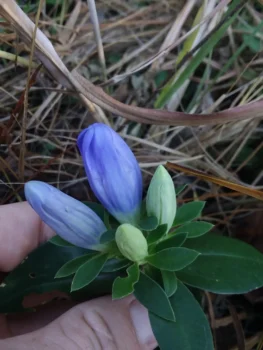
Elliott’s Gentian: A Rare Native Gem for Wetland Gardens
If you’re looking to add a touch of late-season magic to your wetland garden, Elliott’s gentian (Gentiana catesbaei) might just be the perfect choice. This charming native perennial brings beautiful blue to purple blooms to soggy spots when most other flowers have called it quits for the year.
Meet Elliott’s Gentian
Elliott’s gentian is a low-growing native perennial that forms neat rosettes of leaves close to the ground. Don’t let its modest size fool you – this little powerhouse packs a punch with its vibrant tubular flowers that appear in fall, making it a standout when the garden landscape is winding down.
Where You’ll Find It Growing Wild
This southeastern native calls home to a impressive range across the eastern United States. You can find Elliott’s gentian growing naturally in Alabama, Delaware, Florida, Georgia, Maryland, New Jersey, North Carolina, Pennsylvania, South Carolina, and Virginia. It’s particularly fond of the coastal plain regions where it has adapted to thrive in consistently wet conditions.
- Species observed
- No observations
A Word About Rarity
Here’s something important to know: Elliott’s gentian is considered rare in New Jersey, where it holds a Highlands Listed, SX.1 rarity status. If you’re planning to add this beauty to your garden, please make sure you source your plants responsibly from reputable native plant nurseries rather than collecting from wild populations. This helps protect the remaining natural colonies while still allowing you to enjoy this special plant.
Why Your Garden (and Local Wildlife) Will Love It
Elliott’s gentian is like that friend who shows up to the party just when things are getting quiet and livens everything up again. When most flowers are done blooming, this gentian opens its gorgeous tubular flowers in shades of blue to purple, providing crucial nectar for late-season pollinators including bees and butterflies.
As an obligate wetland plant, it’s perfectly suited for those challenging soggy spots in your yard that other plants just can’t handle. Think of it as nature’s solution for wet areas that need a pop of color and wildlife value.
Perfect Garden Spots for Elliott’s Gentian
This moisture-loving native is ideal for:
- Bog gardens and wetland areas
- Rain gardens that collect runoff
- Naturalistic wet meadow plantings
- Native plant gardens with consistent moisture
- Pond or stream edges
- Wetland restoration projects
Growing Conditions That Make It Happy
Elliott’s gentian is pretty specific about its needs, but once you get them right, it’s relatively low-maintenance:
- Light: Full sun to partial shade
- Soil: Consistently moist to wet, acidic soils
- Hardiness: USDA zones 6-9
- Moisture: This is non-negotiable – it needs wet conditions year-round
Planting and Care Tips
Getting Elliott’s gentian established is all about recreating its natural wetland habitat:
- Plant in spring in a location that stays consistently moist or wet
- Add organic matter like peat moss to increase soil acidity if needed
- Avoid fertilizing – this native prefers lean, natural conditions
- Be patient – it may take a year or two to become fully established
- Mulch lightly with organic materials to retain moisture
- Water during dry spells to maintain consistent soil moisture
Is Elliott’s Gentian Right for Your Garden?
This native beauty is perfect for gardeners who have wet areas they want to turn into wildlife havens. If you have a spot that stays soggy and you’ve been struggling to find plants that thrive there, Elliott’s gentian could be your answer. Just remember to source plants responsibly and be prepared to provide the consistently moist conditions it needs to flourish.
With its late-season blooms and important role in supporting pollinators when other food sources are scarce, Elliott’s gentian earns its place as a valuable addition to any wetland-focused native garden.