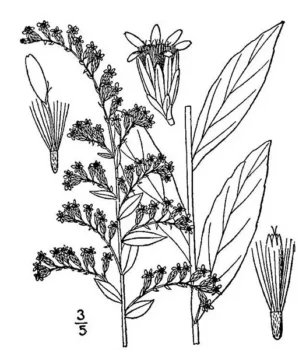
Elliott’s Goldenrod: A Golden Treasure for Wet Gardens
If you’ve been searching for a native plant that can handle those soggy spots in your yard while providing a spectacular late-season show, let me introduce you to Elliott’s goldenrod (Solidago latissimifolia). This cheerful perennial is like having a ray of sunshine in your wettest garden areas, bringing brilliant golden blooms just when most other flowers are calling it quits for the year.
What Makes Elliott’s Goldenrod Special?
Elliott’s goldenrod is a native North American perennial that belongs to the aster family. Unlike its more common cousins, this particular goldenrod has carved out a very specific niche – it’s what we call an obligate wetland plant, meaning it almost always occurs in wet conditions. Think of it as nature’s way of saying, Yes, you can have beautiful flowers in that swampy corner of your yard!
This herbaceous perennial (that’s fancy talk for a non-woody plant that comes back year after year) produces clusters of tiny, bright golden-yellow flowers that create a stunning display from late summer through fall. The blooms are arranged in dense, flat-topped clusters that seem to glow against the backdrop of autumn landscapes.
Where Does Elliott’s Goldenrod Call Home?
This golden beauty is native to eastern North America, with populations scattered across the Atlantic and Gulf coastal regions. You’ll find it naturally growing in Alabama, Connecticut, Delaware, District of Columbia, Florida, Georgia, Maryland, Massachusetts, Mississippi, New Jersey, New York, North Carolina, Rhode Island, South Carolina, Virginia, and Nova Scotia.
- Species observed
- No observations
A Word of Caution: This Plant Needs Special Attention
Here’s something important to know before you start planning your Elliott’s goldenrod garden: this plant has a rarity status of S3 in New Jersey, meaning it’s considered uncommon and potentially vulnerable. If you’re lucky enough to live in an area where this plant grows naturally, it’s crucial to source your plants responsibly. Never collect from wild populations – instead, seek out reputable native plant nurseries that propagate their stock ethically.
Perfect Garden Situations for Elliott’s Goldenrod
Elliott’s goldenrod isn’t your typical garden center perennial – it has very specific needs that make it perfect for certain situations:
- Rain gardens: Excellent choice for managing stormwater runoff
- Bog gardens: Thrives in consistently wet conditions
- Wetland restoration projects: Helps restore natural ecosystems
- Naturalized areas: Perfect for wild or meadow-style landscapes
- Pond edges: Beautiful accent around water features
Growing Conditions: Embrace the Wet
If you’re used to plants that need well-draining soil, Elliott’s goldenrod might seem like it’s from another planet. This plant actually prefers:
- Moisture: Consistently moist to wet soil – think of it as the opposite of drought-tolerant
- Light: Full sun to partial shade (at least 6 hours of direct sunlight is ideal)
- Soil: Adapts to various soil types as long as they stay wet
- Climate: Hardy in USDA zones 4-9
Planting and Care Tips
Once you’ve found a responsibly sourced plant, here’s how to help it thrive:
- Location is everything: Choose the wettest spot in your garden – that low area where water collects is perfect
- Planting time: Spring or fall are ideal planting times
- Spacing: Allow room for natural spreading via underground rhizomes
- Maintenance: Very low maintenance once established – the main requirement is keeping it wet
- Winter care: Cut back dead stems in late winter or leave them for wildlife habitat
Wildlife and Pollinator Benefits
Here’s where Elliott’s goldenrod really shines in the ecosystem department. As a late-blooming native plant, it provides crucial nectar when many other flowers have finished for the season. Bees, butterflies, and other pollinators rely on these golden blooms to fuel up before winter. The seeds also provide food for birds, making this plant a true wildlife magnet.
The timing of Elliott’s goldenrod blooms is particularly valuable – it bridges the gap between summer flowers and winter dormancy, offering a lifeline to pollinators preparing for the cold months ahead.
Is Elliott’s Goldenrod Right for Your Garden?
Elliott’s goldenrod is definitely not a plant for every garden, but it’s absolutely perfect for the right situation. Consider it if you:
- Have consistently wet or boggy areas in your landscape
- Want to support native pollinators with late-season blooms
- Are creating a rain garden or wetland restoration area
- Appreciate the beauty of naturalized, wild-looking gardens
- Can source plants responsibly from reputable nurseries
Skip this plant if you have dry soil conditions, prefer formal garden designs, or can’t commit to keeping the soil consistently moist.
The Bottom Line
Elliott’s goldenrod is like that friend who has very specific needs but is absolutely delightful once you understand them. It won’t work in every garden, but in the right wet conditions, it’s pure gold – literally and figuratively. Just remember to source responsibly and give it the soggy conditions it craves, and you’ll be rewarded with stunning late-season color and the satisfaction of supporting native wildlife.
If you’re dealing with wet areas in your landscape, don’t fight them – embrace them with plants like Elliott’s goldenrod that actually prefer to have their feet wet!