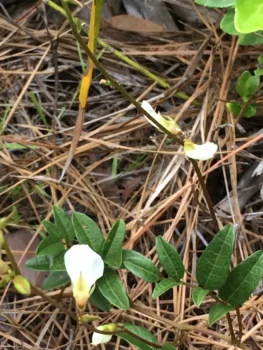
Elliott’s Milkpea: A Charming Native Ground Cover for Southeastern Gardens
If you’re looking for a low-maintenance native plant that brings delicate beauty to your garden while supporting local wildlife, Elliott’s milkpea (Galactia elliottii) might just be the perfect addition to your landscape. This unassuming little perennial packs a surprising punch when it comes to both visual appeal and ecological benefits.
What Is Elliott’s Milkpea?
Elliott’s milkpea is a native perennial forb that belongs to the legume family. As a forb, it’s essentially an herbaceous plant without significant woody tissue – think of it as the plant world’s equivalent of a gentle, ground-hugging vine. Despite its delicate appearance, this hardy native has been quietly thriving in the southeastern United States for generations.
You might occasionally see this plant listed under its botanical synonym, Galactia elliottii var. leavenworthii, but don’t let the fancy names intimidate you – it’s still the same wonderful plant.
Where Elliott’s Milkpea Calls Home
This southeastern native has a relatively focused range, naturally occurring in Florida, Georgia, and South Carolina. It’s perfectly adapted to the coastal plain regions where it originally evolved, making it an excellent choice for gardeners in these areas who want to support local ecosystems.
- Species observed
- No observations
Why You’ll Love Elliott’s Milkpea in Your Garden
Elliott’s milkpea brings several appealing qualities to your landscape:
- Delicate Beauty: The plant produces charming pink to purple pea-like flowers that bloom from summer through fall, creating a subtle but lovely display
- Ground Cover Appeal: Its trailing, low-growing habit makes it perfect for filling in gaps and creating natural-looking ground cover
- Pollinator Magnet: The legume flowers are particularly attractive to bees and butterflies, making your garden a buzzing hub of activity
- Low Maintenance: Once established, this native requires minimal care and attention
Perfect Garden Settings
Elliott’s milkpea shines brightest in naturalistic and native plant gardens. It’s particularly well-suited for:
- Coastal gardens where its natural habitat preferences align perfectly
- Wildlife-friendly landscapes focused on supporting native pollinators
- Low-maintenance garden areas where you want color without constant fussing
- Ground cover applications in sunny to partially shaded spots
Growing Elliott’s Milkpea Successfully
The good news is that Elliott’s milkpea is refreshingly easy to grow, especially if you’re gardening within its native range of USDA hardiness zones 8-10.
Ideal Growing Conditions
- Sunlight: Full sun to partial shade (though it tends to bloom better with more sun)
- Soil: Well-draining sandy soils are preferred, but it’s quite adaptable
- Water: Drought tolerant once established; minimal watering needed
- Wetland Status: Classified as Facultative Upland, meaning it usually grows in non-wetland areas but can tolerate occasional wet conditions
Planting and Care Tips
Getting Elliott’s milkpea established in your garden is straightforward:
- Plant in spring after the last frost for best establishment
- Ensure good drainage – this plant doesn’t appreciate soggy feet
- Water regularly during the first growing season to help roots establish
- Once established, step back and let nature take over – overcare is more harmful than neglect
- No fertilization needed; as a legume, it actually fixes nitrogen in the soil
Supporting Your Local Ecosystem
By choosing Elliott’s milkpea, you’re making a choice that benefits your local environment. Native plants like this one have co-evolved with local wildlife, providing the specific resources that native pollinators and other beneficial insects need to thrive. Plus, its status as a nitrogen-fixing legume means it’s actually improving your soil while it grows.
Is Elliott’s Milkpea Right for Your Garden?
Elliott’s milkpea is an excellent choice if you’re gardening in its native range and looking for a low-maintenance, ecologically beneficial ground cover. It’s particularly perfect for gardeners who appreciate subtle beauty over flashy displays and want to create habitat for native wildlife.
Keep in mind that this plant works best in naturalistic settings rather than formal garden designs. If you’re looking for a neat, tidy ground cover that stays exactly where you put it, you might want to consider other options. But if you love the idea of a gentle, wildlife-friendly plant that brings a touch of native charm to your landscape, Elliott’s milkpea could be exactly what you’re looking for.