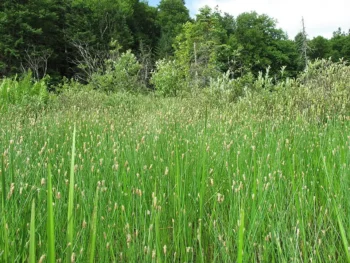
Elliptic Spikerush: A Wetland Wonder for Your Rain Garden
If you’re looking to create a thriving wetland garden or need a reliable plant for those perpetually soggy spots in your yard, elliptic spikerush (Eleocharis elliptica) might just be your new best friend. This unassuming little sedge may not win any beauty contests, but it’s a wetland workhorse that deserves serious consideration for the right garden setting.
What Exactly Is Elliptic Spikerush?
Elliptic spikerush is a perennial graminoid—that’s botanist-speak for a grass-like plant that’s actually a member of the sedge family. Don’t worry if you can’t tell the difference between a grass and a sedge at first glance; even experienced gardeners sometimes need a second look. What matters is that this little plant forms dense, carpet-like colonies with thin, upright stems topped by small, inconspicuous flower clusters called spikelets.
A True North American Native
One of the best things about elliptic spikerush is its impressive native credentials. This plant calls North America home, with populations stretching across Canada and the northern United States. You’ll find it growing naturally from coast to coast, including:
- Canadian provinces: Alberta, British Columbia, Manitoba, New Brunswick, Nova Scotia, Ontario, Quebec, Saskatchewan, Yukon, Northwest Territories, and Newfoundland
- U.S. states: Connecticut, Idaho, Illinois, Indiana, Iowa, Kentucky, Maine, Massachusetts, Michigan, Minnesota, Missouri, Montana, New Hampshire, New Jersey, New York, Ohio, Pennsylvania, Rhode Island, Vermont, Washington, Wisconsin, and Wyoming
- Species observed
- No observations
A Rare Gem Worth Protecting
Here’s where things get interesting—and important. In New Jersey, elliptic spikerush has a rarity status of S2, meaning it’s imperiled in the state. If you’re a New Jersey gardener interested in growing this plant, make sure you source it responsibly from reputable native plant nurseries rather than collecting from the wild. By growing it in your garden, you’re actually helping to conserve this special plant!
The Ultimate Wetland Specialist
Elliptic spikerush isn’t kidding around when it comes to water. Across most of its range, it’s classified as an Obligate Wetland plant, meaning it almost always occurs in wetlands. The only exception is in the Eastern Mountains and Piedmont region, where it’s considered Facultative Wetland—still preferring wet spots but occasionally tolerating drier conditions.
This water-loving nature makes it perfect for:
- Rain gardens and bioswales
- Pond and stream margins
- Wetland restoration projects
- Those chronically wet areas where other plants struggle
Growing Elliptic Spikerush Successfully
The good news is that if you can provide the right conditions, elliptic spikerush is relatively low-maintenance. Here’s what it needs to thrive:
Moisture: This is non-negotiable. The soil needs to stay consistently moist to wet. Think bog conditions rather than your typical garden bed.
Sunlight: Full sun to partial shade works well, though it tends to be happiest with plenty of sunshine.
Hardiness: Suitable for USDA zones 3-7, making it perfect for northern gardeners dealing with harsh winters.
Soil: While it’s not particularly picky about soil type, it does need that consistent moisture. Clay soils that hold water work better than sandy, well-draining soils.
What to Expect
Don’t plant elliptic spikerush expecting showy flowers or dramatic foliage. This plant’s beauty lies in its subtle, naturalistic appearance and its ability to form dense colonies that help prevent erosion and filter water. It spreads via underground rhizomes, so give it room to establish a colony—or be prepared to manage its spread if space is limited.
Wildlife Value
While elliptic spikerush may not be a pollinator magnet (it’s wind-pollinated), it provides valuable habitat structure in wetland ecosystems. The dense growth offers shelter for small wildlife, and the seeds may provide food for waterfowl and other birds.
Is Elliptic Spikerush Right for Your Garden?
This plant is definitely not for everyone. If you’re looking for colorful blooms or don’t have consistently wet conditions, you’ll want to look elsewhere. But if you’re dealing with a wet, soggy area that needs stabilizing, or if you’re passionate about wetland restoration and native plant conservation, elliptic spikerush could be exactly what you need.
Remember, successful gardening is about matching the right plant to the right place. For the right wetland garden, elliptic spikerush is a champion—just don’t expect it to thrive in your perennial border!