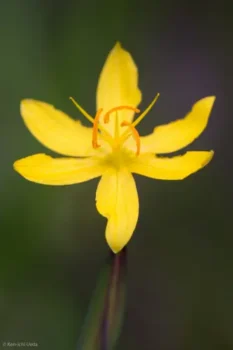
Elmer’s Blue-Eyed Grass: A California Native for Wetland Gardens
If you’re looking to add authentic California native beauty to your wetland garden or boggy landscape, Elmer’s blue-eyed grass (Sisyrinchium elmeri) might just be the hidden gem you’ve been searching for. This charming perennial belongs to the fascinating world of blue-eyed grass species, though don’t let the name fool you – it’s actually a member of the iris family, not a true grass at all!
What Makes Elmer’s Blue-Eyed Grass Special?
Sisyrinchium elmeri is a California native that’s as specialized as it is beautiful. This petite forb (a non-woody flowering plant) has earned its place as an obligate wetland species, meaning it almost always occurs in wetland environments. For gardeners passionate about native plants and ecological restoration, this makes it a particularly valuable addition to the right setting.
Previously known by the synonym Hydastylus elmeri, this perennial has adapted specifically to California’s unique wetland ecosystems, making it a true representative of the Golden State’s botanical heritage.
Where Does It Grow?
Elmer’s blue-eyed grass is exclusively native to California, where it thrives in the state’s wetland habitats. As an obligate wetland plant in both the Arid West and Western Mountains, Valleys, and Coast regions, it has very specific habitat requirements that reflect California’s diverse but moisture-dependent ecosystems.
- Species observed
- No observations
Should You Plant Elmer’s Blue-Eyed Grass?
The answer depends entirely on your garden situation and goals. Here’s what you need to know:
Perfect For:
- Wetland restoration projects
- Rain gardens and bioswales
- Bog gardens
- Native plant enthusiasts with consistently wet areas
- California gardeners supporting local ecosystems
Not Suitable For:
- Traditional perennial borders
- Drought-tolerant landscapes
- Areas with regular dry periods
- Gardeners seeking low-maintenance options
Growing Conditions and Care
Success with Elmer’s blue-eyed grass requires understanding its obligate wetland nature. This isn’t a plant that tolerates oops, I forgot to water moments!
Essential Growing Requirements:
- Moisture: Consistently wet to moist soil – never allow to dry out
- Soil: Tolerates various soil types as long as they remain saturated
- Light: Likely prefers full sun to partial shade (typical for the genus)
- Climate: California’s climate zones where wetlands naturally occur
Planting and Care Tips
Given the specialized nature of this plant, here are some key considerations:
- Plant in areas with natural water sources or reliable irrigation systems
- Consider it for constructed wetlands or rain garden projects
- Source plants responsibly from native plant nurseries specializing in wetland species
- Plant alongside other California native wetland species for a naturalistic approach
- Monitor soil moisture levels, especially during establishment
A Word About Availability
Elmer’s blue-eyed grass isn’t your typical nursery find. Its specialized habitat requirements and limited distribution mean it’s primarily of interest to serious native plant gardeners and restoration professionals. If you’re interested in growing this species, connect with California native plant societies or specialized native plant nurseries that focus on wetland species.
The Bottom Line
Elmer’s blue-eyed grass represents the kind of specialized native plant that makes California’s flora so unique. While it won’t work in every garden, it’s perfect for gardeners with the right conditions who want to support authentic local ecosystems. If you have a consistently wet area in your California landscape and a passion for native plants, this little blue-eyed beauty could be exactly what your wetland garden needs.
Remember, growing native plants like Sisyrinchium elmeri isn’t just about adding beauty to your landscape – it’s about preserving California’s botanical heritage and supporting the intricate web of relationships that make our local ecosystems thrive.