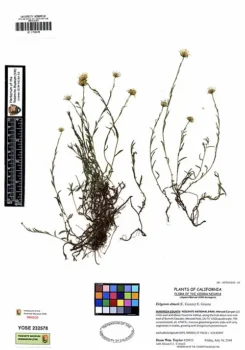
Elmer’s Erigeron: A Rare California Native Worth Growing Responsibly
Meet Elmer’s erigeron (Erigeron elmeri), a charming little daisy that’s as rare as it is beautiful. This petite California native might not be the showiest plant in your garden, but what it lacks in size, it makes up for in ecological value and understated charm. If you’re lucky enough to find responsibly sourced plants or seeds, this delightful perennial could become a treasured addition to your native plant collection.
What Makes Elmer’s Erigeron Special?
This unassuming little forb belongs to the sunflower family and produces delicate, daisy-like flowers that dance on slender stems from spring through summer. The blooms feature crisp white to pale pink petals radiating from cheerful yellow centers – a classic combination that never goes out of style. As a perennial, it returns year after year, slowly forming small colonies that add texture and seasonal interest to your landscape.
Elmer’s erigeron is what botanists call a forb, which is simply a fancy way of saying it’s a non-woody flowering plant. Don’t let the technical term fool you – this is just a sweet little wildflower that happens to pack a lot of ecological punch.
Where Does It Come From?
This California endemic calls the Golden State home, with populations scattered throughout the Sierra Nevada mountains. It’s a true local, having evolved specifically in California’s unique climate and soil conditions.
- Species observed
- No observations
A Word About Rarity
Important note for responsible gardeners: Elmer’s erigeron has a conservation status of S3?, which indicates some level of rarity or uncertainty about its population status. If you’re interested in growing this plant, please only purchase from reputable native plant nurseries that propagate their stock rather than collecting from wild populations. Never collect plants or seeds from natural areas – this helps protect wild populations for future generations.
Why Grow Elmer’s Erigeron?
Here are several compelling reasons to consider this native gem:
- Pollinator magnet: Those small flowers are perfectly sized for native bees, butterflies, and other beneficial insects
- Low maintenance: Once established, it’s quite drought tolerant and requires minimal care
- Authentic California character: Adds genuine local flavor to native plant gardens
- Rock garden star: Perfect scale and growing requirements for rock gardens and xeriscaping
- Extended bloom time: Flowers from spring through summer provide consistent color
Growing Conditions and Care
Elmer’s erigeron thrives in USDA hardiness zones 5-9, making it suitable for most of California and similar climates. Like many California natives, it has some specific preferences:
Light and Soil Requirements
- Sunlight: Full sun to partial shade (morning sun with afternoon shade works well)
- Soil: Well-draining soil is absolutely essential – this plant despises wet feet
- pH: Adapts to various soil pH levels but prefers neutral to slightly alkaline conditions
- Drainage: Cannot stress this enough – good drainage prevents root rot
Planting and Establishment Tips
Getting your Elmer’s erigeron off to a good start requires attention to timing and technique:
- Plant in fall or early spring when temperatures are moderate
- Dig holes slightly wider than the root ball but no deeper
- Amend heavy clay soils with coarse sand or gravel for better drainage
- Water regularly during the first growing season to establish roots
- Apply a thin layer of gravel mulch to suppress weeds and conserve moisture
Ongoing Care
Once established, Elmer’s erigeron is refreshingly low-maintenance:
- Watering: Reduce watering significantly after the first year – overwatering is more dangerous than underwatering
- Fertilizing: Generally unnecessary and may promote excessive foliage growth
- Deadheading: Optional, but removing spent flowers can encourage more blooms
- Winter care: Cut back dead foliage in late fall or early spring
Perfect Garden Companions
Elmer’s erigeron plays well with other California natives that share similar growing requirements. Consider pairing it with other drought-tolerant perennials like penstemon, buckwheat, or native grasses for a cohesive, water-wise landscape that celebrates local ecology.
The Bottom Line
While Elmer’s erigeron might not be the easiest native plant to find, it’s certainly worth the search for dedicated California native plant enthusiasts. Its combination of ecological value, low maintenance requirements, and subtle beauty makes it a worthy addition to rock gardens, native landscapes, and xeriscapes. Just remember to source it responsibly and give it the well-draining conditions it craves. Your local pollinators will thank you, and you’ll have the satisfaction of growing a true California original.