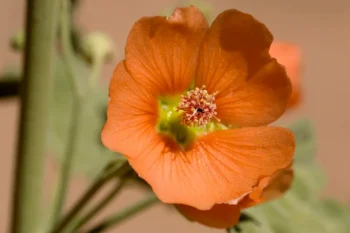
Emory’s Globemallow: A Desert Gem for Your Southwest Garden
If you’re looking for a resilient, colorful native plant that practically grows itself while supporting local wildlife, let me introduce you to Emory’s globemallow (Sphaeralcea emoryi). This delightful southwestern native is like that reliable friend who always shows up looking fabulous without much fuss—and your garden pollinators absolutely love it.
What Makes Emory’s Globemallow Special?
Emory’s globemallow is a perennial forb that brings vibrant orange to coral-colored cup-shaped flowers to the desert landscape. The blooms appear from spring through fall, creating a long season of color when many other plants are taking a summer break. Its gray-green, fuzzy foliage provides a lovely textural contrast and helps the plant conserve moisture in harsh desert conditions.
As a native plant to the southwestern United States, this globemallow is perfectly adapted to life in Arizona, California, Nevada, and New Mexico. It’s a true child of the desert, which means it knows how to handle the heat and drought that would send other plants packing.
- Species observed
- No observations
Why Your Garden (and Local Wildlife) Will Thank You
Here’s where Emory’s globemallow really shines—it’s a pollinator magnet. Bees buzz happily around its flowers, butterflies flutter by for a visit, and hummingbirds often stop by for a sip. By planting this native beauty, you’re essentially setting up a neighborhood café for beneficial insects and birds.
The plant works wonderfully as a ground cover, spreading naturally to fill in spaces without being aggressive. It’s perfect for rock gardens, xeriscapes, desert-themed landscapes, and native plant gardens where you want color without the water bill.
Growing Emory’s Globemallow: Less is More
One of the best things about Emory’s globemallow is how easy it is to grow—as long as you resist the urge to baby it. This plant thrives in USDA hardiness zones 8-11 and prefers:
- Full sun (the more, the better)
- Well-draining soil (soggy feet are its kryptonite)
- Minimal water once established
- Space to spread naturally
Planting and Care Tips
When planting Emory’s globemallow, think desert conditions. Choose a sunny spot with good drainage—if water pools there after rain, pick somewhere else. The plant is drought-tolerant once established, but you can give it occasional deep watering during extreme heat.
Here’s the golden rule: when in doubt, don’t water. Overwatering is the fastest way to kill this desert native. Let the soil dry out completely between waterings, and in winter, you can probably skip watering altogether unless you’re experiencing an unusually dry spell.
The plant may self-seed in favorable conditions, giving you new plants without any effort on your part. If you want to control its spread, simply remove the seed heads after flowering.
Is Emory’s Globemallow Right for Your Garden?
If you live in the Southwest and want a low-maintenance, water-wise plant that supports local wildlife while adding months of color to your landscape, Emory’s globemallow is an excellent choice. It’s particularly perfect for gardeners who want to embrace native landscaping or anyone tired of fighting the desert climate instead of working with it.
However, if you’re gardening in a humid climate or prefer plants that need regular watering and rich soil, this desert native might not be the best fit. Stick to plants adapted to your local conditions—there are wonderful native alternatives for every region.
Emory’s globemallow proves that sometimes the best garden plants are the ones that have been thriving in your area for thousands of years. Give this native beauty a try, and you might just find yourself with a new favorite that’s as tough as it is beautiful.