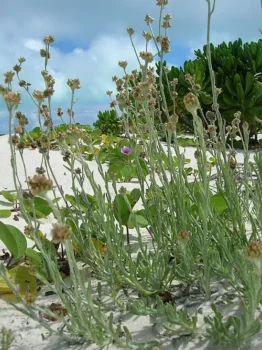
‘Ena’ena: A Treasured Native Hawaiian Ground Cover Worth Preserving
If you’re looking to add a touch of authentic Hawaiian flora to your garden while supporting native plant conservation, ‘ena’ena (Pseudognaphalium sandwicensium) might just be the perfect choice. This charming native perennial brings both beauty and ecological value to island landscapes, though it comes with an important conservation story every gardener should know.
What Makes ‘Ena’ena Special
‘Ena’ena is a delightful Hawaiian native that’s as practical as it is beautiful. This low-growing perennial forb produces clusters of small, silvery-white flowers that seem to glow against its soft, grayish-green foliage. The entire plant has a lovely woolly texture that gives it an almost ethereal appearance, especially when morning dew catches on its fuzzy leaves.
As a member of the sunflower family, ‘ena’ena grows as a herbaceous perennial, meaning it lacks woody stems but returns year after year. Its modest height and spreading habit make it an excellent ground cover option for Hawaiian gardens.
Where You’ll Find ‘Ena’ena Growing Wild
‘Ena’ena is endemic to Hawaii and select Pacific islands, making it a true treasure of Polynesian flora. You can find this native beauty growing naturally across the Hawaiian Islands and in some U.S. Minor Outlying Islands in the Pacific.
- Species observed
- No observations
A Conservation Success Story in the Making
Here’s where things get important: ‘ena’ena is currently listed as vulnerable (S3 conservation status), meaning it’s at risk throughout its natural range. With typically only 21 to 100 occurrences and between 3,000 to 10,000 individuals remaining in the wild, this plant needs our help.
What this means for gardeners: While we absolutely encourage growing ‘ena’ena, please source your plants responsibly from reputable native plant nurseries or conservation programs. Never harvest from wild populations, and consider growing this species as part of your contribution to preserving Hawaiian biodiversity.
Why Grow ‘Ena’ena in Your Garden
‘Ena’ena offers several compelling reasons to earn a spot in your landscape:
- Authentic Hawaiian character: Add genuine native beauty to your garden
- Low maintenance: Once established, it’s quite drought-tolerant
- Pollinator support: Attracts native Hawaiian moths and other small pollinators
- Conservation impact: Help preserve a vulnerable species
- Unique texture: The woolly foliage adds interesting contrast to other plants
Perfect Garden Settings
‘Ena’ena thrives in several garden styles:
- Native Hawaiian gardens: Pairs beautifully with other indigenous plants
- Xerophytic landscapes: Excellent for water-wise gardening
- Restoration projects: Ideal for habitat restoration efforts
- Ground cover applications: Creates lovely naturalistic carpets
Growing ‘Ena’ena Successfully
The good news is that ‘ena’ena is relatively easy to grow once you understand its preferences. This tropical native is suited for USDA hardiness zones 10-11, making it perfect for Hawaii and similar subtropical climates.
Ideal Growing Conditions
- Light: Full sun to partial shade
- Soil: Well-draining soils (avoid waterlogged conditions)
- Water: Drought-tolerant once established, but appreciates occasional watering
- Climate: Tropical to subtropical conditions
Planting and Care Tips
- Plant in well-draining soil to prevent root rot
- Water regularly during establishment, then reduce frequency
- Avoid overwatering – this is one of the most common mistakes
- Occasional light pruning helps maintain shape and encourages new growth
- Mulching around plants helps retain moisture and suppress weeds
Supporting Conservation While Gardening
By choosing to grow ‘ena’ena, you’re participating in something bigger than just gardening – you’re helping conserve Hawaiian biodiversity. Consider connecting with local native plant societies or conservation groups to learn more about protecting vulnerable species like this one.
Remember, every ‘ena’ena plant in cultivation is a small victory for conservation. With responsible growing and sourcing, we can enjoy this beautiful native while ensuring future generations will too.