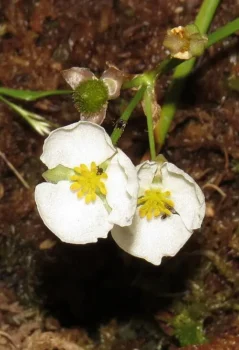
Engelmann’s Arrowhead: A Native Wetland Beauty for Your Water Garden
If you’re looking to add some pizzazz to your pond edge or create a stunning rain garden, meet Engelmann’s arrowhead (Sagittaria engelmanniana) – a delightfully distinctive native plant that’s sure to make a splash in your landscape! This charming perennial brings both beauty and ecological benefits to any water-loving garden setting.
What Makes Engelmann’s Arrowhead Special?
Engelmann’s arrowhead is a native forb that’s perfectly at home in wet conditions. As its common name suggests, this plant sports gorgeous arrow-shaped leaves that create an eye-catching display even before the flowers appear. But the real showstopper comes when tall spikes of pristine white, three-petaled flowers emerge above the foliage, creating a stunning contrast against the green backdrop.
This perennial beauty is classified as a forb, meaning it’s an herbaceous plant without woody stems – think of it as nature’s way of creating a soft, approachable water garden resident that won’t overwhelm your space with aggressive woody growth.
Where Does It Call Home?
Engelmann’s arrowhead is proudly native to the eastern United States, naturally occurring across a impressive range of states including Alabama, Connecticut, Delaware, Georgia, Maryland, Massachusetts, Mississippi, New Jersey, New York, North Carolina, Pennsylvania, Rhode Island, South Carolina, and Virginia. This wide distribution speaks to its adaptability within suitable wetland conditions.
- Species observed
- No observations
Perfect for Water-Loving Gardens
Here’s where Engelmann’s arrowhead really shines – it’s an obligate wetland plant, meaning it almost always occurs in wetlands across all its native regions. This makes it absolutely perfect for:
- Pond margins and water garden edges
- Rain gardens and bioswales
- Bog gardens
- Wetland restoration projects
- Native plant gardens with consistent moisture
If you have a naturally wet area in your yard that’s been challenging to landscape, this might just be your new best friend!
Growing Engelmann’s Arrowhead Successfully
The good news is that once you understand this plant’s water-loving nature, it’s relatively straightforward to grow. Engelmann’s arrowhead thrives in USDA hardiness zones 5-9, making it suitable for most temperate climates.
Light requirements: This adaptable native performs best in full sun to partial shade conditions.
Water needs: Here’s the key – consistent moisture is non-negotiable. This plant loves consistently moist to wet soils and can even thrive in standing water up to several inches deep.
Planting tips: Spring is the ideal time to establish Engelmann’s arrowhead. Plant it at the water’s edge or in consistently boggy soil. Once established, it requires minimal maintenance – just let nature do its thing!
Benefits for Pollinators and Wildlife
Those lovely white flowers aren’t just for show – they’re pollinator magnets! Engelmann’s arrowhead attracts various beneficial insects including bees and butterflies, making it a valuable addition to any pollinator-friendly garden. The plant also provides habitat and food sources for various wildlife species that depend on wetland environments.
Is Engelmann’s Arrowhead Right for Your Garden?
This native beauty is perfect for gardeners who:
- Have naturally wet areas or water features to landscape
- Want to support native ecosystems and pollinators
- Appreciate unique foliage and delicate flowers
- Are working on wetland restoration or rain garden projects
- Live within its native range and want to grow regionally appropriate plants
However, it might not be the best choice if you have only dry garden areas or are looking for a drought-tolerant plant. Remember, this is an obligate wetland species that needs consistent moisture to thrive.
Engelmann’s arrowhead proves that native plants can be both beautiful and functional, offering a perfect blend of aesthetic appeal and ecological benefits. If you’re ready to embrace water gardening or have been struggling with a perpetually wet spot in your landscape, this charming native might just be the solution you’ve been seeking!