Engelmann’s Seagrass: A Marine Marvel That’s Not for Your Garden
If you’ve stumbled across Engelmann’s seagrass (Halophila engelmannii) in your search for native plants, you might be wondering if this native species could work in your landscape. Here’s the thing though – this fascinating plant lives underwater in saltwater, making it about as suitable for your backyard as a dolphin would be in your living room!
What Exactly Is Engelmann’s Seagrass?
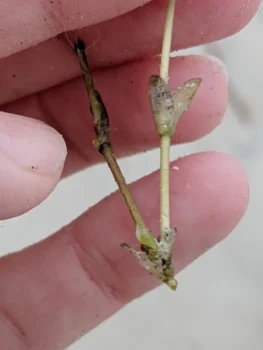
Engelmann’s seagrass is a perennial marine plant that’s technically classified as a forb – meaning it’s a vascular plant without woody tissue. But unlike the forbs you might know from prairie gardens, this one has adapted to life completely underwater in salty coastal waters. It produces delicate, oval-shaped leaves that grow in pairs along slender stems, creating underwater meadows that sway gently with ocean currents.
Where Does It Naturally Grow?
This native species calls the warm coastal waters of the southeastern United States home, specifically thriving in Florida, Louisiana, Mississippi, and Texas. You’ll find it growing in shallow coastal areas, typically in sandy or muddy bottoms where sunlight can still penetrate the water.
- Species observed
- No observations
Why You Can’t (And Shouldn’t Try To) Grow It in Your Garden
As much as we love promoting native plants, Engelmann’s seagrass is definitely not a candidate for your landscape, and here’s why:
- It requires saltwater to survive – your garden hose won’t cut it
- It needs to be completely submerged in 1-10 feet of water
- It requires specific marine conditions including water temperature, salinity, and underwater light levels
- It’s classified as an obligate wetland species that almost always occurs in wetlands – specifically marine wetlands
What About Marine Aquariums?
While some aquatic enthusiasts might wonder about growing Engelmann’s seagrass in marine aquariums, this is extremely challenging and generally not recommended for home aquarists. It requires very specific conditions that are difficult to replicate, including proper water chemistry, lighting, and substrate conditions that mimic its natural coastal habitat.
Native Alternatives for Wetland Gardens
If you’re interested in native plants for wet areas of your landscape, consider these terrestrial alternatives that can handle soggy soils:
- Wild rice (Zizania species) for pond edges
- Pickerelweed (Pontederia cordata) for shallow water features
- Blue flag iris (Iris virginica) for rain gardens and pond margins
- Arrowhead (Sagittaria species) for water gardens
The Ecological Importance
While you can’t grow Engelmann’s seagrass in your garden, it’s worth appreciating its crucial role in coastal ecosystems. These underwater meadows provide habitat for marine life, help stabilize sediments, and contribute to the overall health of our coastal waters. If you live near the coast, supporting coastal conservation efforts is one way to help protect this important native species.
The Bottom Line
Engelmann’s seagrass is a fascinating native species, but it’s strictly a marine plant that belongs in saltwater, not in terrestrial gardens. Instead of trying to grow this aquatic native, focus on choosing appropriate native plants for your specific growing conditions. Your local native plant society can help you find the perfect native species that will actually thrive in your garden – on dry land!