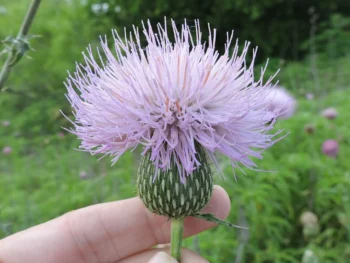
Engelmann’s Thistle: A Rare Native Beauty Worth Protecting
If you’re looking to add some wild, untamed beauty to your native garden, Engelmann’s thistle (Cirsium engelmannii) might just be the perfect spiky character you’ve been searching for. This distinctive native thistle brings both charm and ecological value to the landscape, though its rarity makes it a plant that deserves our special attention and care.
What Makes Engelmann’s Thistle Special
Engelmann’s thistle is a true native of the south-central United States, calling Arkansas, Louisiana, Oklahoma, and Texas home. As a member of the sunflower family, this forb (that’s botanist-speak for a non-woody flowering plant) can live as either a biennial or perennial, depending on growing conditions.
What really sets this thistle apart from its cousins is its impressive stature and timing. The plant produces stunning purple-pink flower heads that bloom from late summer into fall, creating a dramatic display just when many other wildflowers are winding down for the season.
- Species observed
- No observations
A Word of Caution: Rarity Matters
Before we dive into growing tips, there’s something important you should know. Engelmann’s thistle carries a rarity status of S1 in Arkansas, meaning it’s critically imperiled in that state. This makes it a plant worth protecting and celebrating, but it also means we need to be responsible about how we source it.
If you’re interested in growing this native beauty, please only obtain seeds or plants from reputable native plant nurseries that use responsibly collected, locally-sourced material. Never collect from wild populations.
Garden Role and Design Ideas
Engelmann’s thistle isn’t your typical front-and-center garden star, but it absolutely shines in the right setting. Here’s where it works best:
- Native plant and prairie gardens where its wild character fits right in
- Wildlife gardens designed to support local pollinators
- Naturalized areas and meadow-style plantings
- Back-of-border positions where its height won’t overwhelm smaller plants
The plant’s architectural form and late-season blooms make it an excellent companion for native grasses, asters, and goldenrod. Its spiky texture provides wonderful contrast to softer, rounded plant forms.
Pollinator and Wildlife Benefits
Don’t let those spines fool you – pollinators absolutely love Engelmann’s thistle! The nectar-rich flowers attract butterflies, native bees, and other beneficial insects. The timing of its blooms is particularly valuable, providing a crucial late-season food source when other flowers may be scarce.
Like many native thistles, this plant also supports wildlife beyond just pollinators, though specific wildlife benefits for this particular species aren’t well-documented in available research.
Growing Conditions and Care
The good news about Engelmann’s thistle is that it’s relatively low-maintenance once you understand its preferences. Here’s what it needs to thrive:
- Sunlight: Full sun is essential for best performance
- Soil: Well-drained soils of various types; adaptable to different soil conditions
- Water: Drought tolerant once established, though it appreciates some moisture
- Climate: Hardy in USDA zones 6-9, perfect for its native range
Planting and Propagation Tips
Growing Engelmann’s thistle from seed is typically your best bet, and fall seeding often gives the best results. The seeds benefit from cold stratification over winter, which naturally occurs when you sow them in autumn.
Here are some key growing tips:
- Direct sow seeds in fall for spring germination
- Barely cover seeds with soil – they need some light to germinate
- Be patient – germination can be sporadic
- Once established, the plant may self-seed in favorable conditions
- Minimal fertilization needed – too much nitrogen can actually reduce flowering
Maintenance and Management
One of the best things about native plants like Engelmann’s thistle is how little fussing they require. Once established, this plant largely takes care of itself. You can deadhead spent flowers if you prefer a tidier look, or leave them for wildlife and natural reseeding.
If the plant becomes too aggressive in spreading (though this is rarely an issue), simply remove unwanted seedlings in spring when they’re easy to spot and pull.
Is Engelmann’s Thistle Right for Your Garden?
This native thistle is perfect for gardeners who:
- Want to support local ecosystems and rare native plants
- Appreciate wildflower-style gardens over formal landscapes
- Are looking for low-maintenance, drought-tolerant natives
- Live within its natural range (Texas, Oklahoma, Arkansas, Louisiana)
- Want to provide late-season pollinator resources
However, it might not be the best choice if you prefer highly manicured gardens or need plants for shady locations.
A Plant Worth Preserving
Engelmann’s thistle represents something special in the native plant world – a beautiful, ecologically valuable species that needs our help to thrive. By growing it responsibly in our gardens, we’re not just adding an interesting plant to our landscapes; we’re participating in conservation efforts that help preserve our natural heritage.
Remember, always source your plants or seeds from reputable suppliers who practice responsible collection methods. Together, we can help ensure that future generations will be able to enjoy the spiky charm of Engelmann’s thistle in both wild spaces and cultivated gardens.