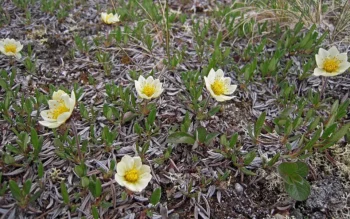
Entireleaf Mountain-Avens: A Hardy Arctic Beauty for Cold Climate Gardens
If you’re gardening in the far north and looking for a plant that laughs in the face of harsh winters, let me introduce you to entireleaf mountain-avens (Dryas integrifolia). This tough little perennial is like the ultimate cold-weather survivor – it’s practically built for conditions that would make most garden plants wave the white flag of surrender.
What Exactly Is Entireleaf Mountain-Avens?
Entireleaf mountain-avens is a low-growing, mat-forming perennial that belongs to the rose family. Don’t let that family connection fool you into expecting thorns and tall canes – this plant stays close to the ground, forming dense cushions that rarely exceed a few inches in height but can spread to create lovely carpets of green.
As a native North American plant, it calls home some pretty impressive places: Alaska, much of Canada including the Northwest Territories and Nunavut, Greenland, and even ventures into the northern Rocky Mountain states like Montana and New Hampshire. This plant has serious cold-weather credentials!
- Species observed
- No observations
Why You Might Want to Grow It
Here’s where entireleaf mountain-avens really shines. In late spring to early summer, this unassuming ground-hugger produces surprisingly showy white flowers with eight petals that seem almost too large for the plant. After the flowers fade, you get another show – fluffy, feathery seed heads that catch the light beautifully and add texture to your garden well into fall.
The plant’s evergreen leaves are small, leathery, and tough as nails. They’ll stay green through the most brutal winters, giving you year-round interest when most other plants have called it quits for the season.
Perfect Garden Situations
This isn’t a plant for everyone or every garden, and that’s perfectly okay! Entireleaf mountain-avens is ideal for:
- Rock gardens where you want authentic alpine character
- Cold-climate native plant gardens
- Areas where you’re trying to recreate tundra or arctic conditions
- Spots with excellent drainage and full sun exposure
- Gardens in USDA hardiness zones 1-4 (possibly zone 5 with perfect conditions)
Growing Conditions: Keep It Simple
The good news about entireleaf mountain-avens is that once you understand what it needs, it’s remarkably low-maintenance. Think arctic tundra when planning its spot:
Sunlight: Full sun is essential. This plant evolved under the endless daylight of arctic summers.
Soil: Well-draining soil is absolutely critical. It actually prefers somewhat alkaline conditions and can handle poor, rocky soil better than rich, fertile ground. Wet feet will kill it faster than you can say root rot.
Water: Once established, it’s quite drought-tolerant. In fact, overwatering is more likely to cause problems than underwatering.
Climate: This plant needs cold winters to thrive. If you’re gardening in warm climates, this probably isn’t the plant for you.
Planting and Care Tips
Getting started with entireleaf mountain-avens requires a bit of patience, but it’s worth the effort:
- Plant in spring or early fall when temperatures are cool
- Ensure your planting site has perfect drainage – consider raised beds or rock gardens
- Space plants about 12-18 inches apart if you want them to form a mat
- Water regularly the first season to help establish roots, then back off
- No fertilizing needed – this plant actually prefers lean conditions
- Minimal pruning required; just remove any damaged growth in spring
Wildlife and Pollinator Benefits
Those cheerful white flowers aren’t just pretty – they’re also valuable to pollinators adapted to cold climates. Various flies, beetles, and specialized arctic bees will visit the blooms. The seeds provide food for small birds and mammals, making this plant a great choice for supporting local wildlife.
The Bottom Line
Entireleaf mountain-avens is definitely a specialized plant for specialized conditions. If you garden in the far north and want something authentically native that can handle whatever winter throws at it, this could be your new best friend. However, if you’re in warmer climates or prefer high-maintenance, tropical-looking plants, you might want to look elsewhere.
For the right gardener in the right location, though, entireleaf mountain-avens offers a unique combination of toughness, beauty, and authentic native character that’s hard to beat. Plus, there’s something deeply satisfying about growing a plant that considers an arctic winter just another day at the office!