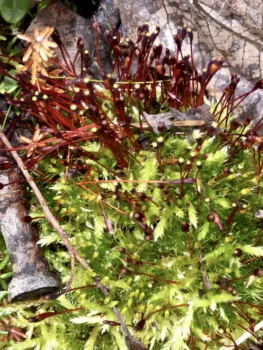
Entireleaf Nitrogen Moss: A Tiny Wonder in Your Natural Garden
Meet the entireleaf nitrogen moss (Tetraplodon mnioides), a fascinating little bryophyte that you might stumble upon in the cooler corners of North America. While it may not be the showstopper of your garden like a blazing cardinal flower or towering oak tree, this modest moss plays its own quiet but important role in natural ecosystems.
What Exactly Is Entireleaf Nitrogen Moss?
Don’t let the name intimidate you! Entireleaf nitrogen moss is simply a small, terrestrial moss that belongs to the bryophyte family. Think of bryophytes as the quiet cousins of the plant world – they include mosses, hornworts, and liverworts. These little green plants are herbaceous and love to attach themselves to solid surfaces like rocks, fallen logs, or even living tree bark rather than growing directly in soil.
This particular moss is native to North America and has quite the cosmopolitan lifestyle, with a circumpolar distribution that spans the northern regions of our continent. You’ll typically find it hanging out in boreal and arctic areas where the climate stays nice and cool.
Spotting This Moss in the Wild
Identifying entireleaf nitrogen moss can be a bit tricky since it’s quite small and unassuming. Here are some key features to look for:
- Small, low-growing moss that forms loose patches
- Distinctive sporophytes (the reproductive structures) that rise above the main plant body
- Prefers growing on decaying organic matter, particularly nitrogen-rich substrates
- Thrives in cool, moist environments
Is It Beneficial for Your Garden?
While you won’t find entireleaf nitrogen moss at your local nursery, and you probably won’t be intentionally planting it, this little moss can actually be quite beneficial if it shows up naturally in your landscape. Here’s why:
- It helps with soil stabilization and erosion control
- Contributes to the overall biodiversity of your natural areas
- Plays a role in nutrient cycling, particularly nitrogen processing
- Provides habitat for tiny invertebrates and microorganisms
Creating Conditions for Natural Moss Growth
If you’re interested in encouraging native mosses like entireleaf nitrogen moss to establish naturally in your garden, you can create the right conditions:
- Maintain areas with consistent moisture
- Provide shade or partial shade
- Leave some decaying organic matter like fallen logs or leaf litter
- Avoid using chemical fertilizers or pesticides in natural areas
- Be patient – mosses establish slowly and naturally
A Word About Hardiness
This cold-loving moss is incredibly hardy and can handle harsh northern climates (likely USDA zones 1-6). It’s adapted to survive freezing temperatures and harsh weather conditions that would make many garden plants throw in the towel.
The Bottom Line
Entireleaf nitrogen moss isn’t a plant you’ll actively cultivate, but it’s definitely one to appreciate if it appears naturally in your landscape. Think of it as a sign that your garden ecosystem is healthy and diverse. While it won’t provide nectar for butterflies or dramatic seasonal color changes, it contributes to the intricate web of life that makes natural gardens so fascinating.
So next time you’re wandering through a shaded, moist area of your property and spot some small, unassuming moss, take a moment to appreciate these tiny green pioneers. They’ve been quietly doing their job for millions of years, and they’re pretty good at it!