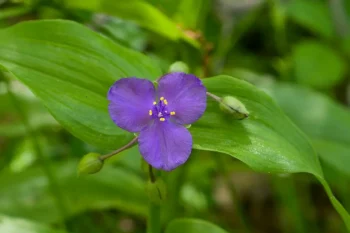
Ernest’s Spiderwort: A Rare Native Gem for Southern Gardens
If you’re a gardener who loves discovering hidden treasures in the native plant world, Ernest’s spiderwort (Tradescantia ernestiana) might just be the perfect addition to your collection. This lesser-known member of the spiderwort family brings both beauty and conservation value to gardens across the American South.
What Makes Ernest’s Spiderwort Special?
Ernest’s spiderwort is a perennial forb—basically a non-woody flowering plant that comes back year after year. Unlike shrubs or trees, this charming plant lacks significant woody tissue and keeps its growing points right at or below ground level, making it perfectly adapted to survive through different seasons.
As a true native of the lower 48 states, this spiderwort has evolved alongside local ecosystems for thousands of years. It’s naturally found across six states: Alabama, Arkansas, Mississippi, Missouri, Oklahoma, and Texas, where it has learned to thrive in the unique conditions of the southeastern and south-central regions.
- Species observed
- No observations
A Word About Rarity (This is Important!)
Here’s where things get interesting—and a bit serious. Ernest’s spiderwort isn’t your run-of-the-mill garden plant. It has a global conservation status of S3S4Q, and in Alabama, it’s considered quite rare with an S1 status. This means if you’re lucky enough to find this plant available, you’re dealing with something pretty special.
Important note for responsible gardeners: If you decide to grow Ernest’s spiderwort, please make sure you source it responsibly from reputable native plant nurseries or conservation organizations. Never collect plants from the wild—this could harm already vulnerable populations.
Why Consider Ernest’s Spiderwort for Your Garden?
While specific information about this particular spiderwort species is limited, it belongs to a family known for their delicate beauty and easy-going nature. As a member of the Tradescantia genus, Ernest’s spiderwort likely shares many wonderful characteristics with its better-known cousins:
- Attractive three-petaled flowers that add subtle color to garden spaces
- Low-maintenance perennial growth that returns each year
- Native heritage that supports local ecosystems
- Potential benefits for pollinators and wildlife
Growing Ernest’s Spiderwort Successfully
Since specific growing information for Tradescantia ernestiana is limited in available resources, here’s what we can reasonably expect based on its native range and plant family characteristics:
Climate Considerations: Given its natural distribution across the South and lower Midwest, Ernest’s spiderwort is likely well-suited to warm, humid climates and should be hardy in areas with similar conditions to its native range.
Garden Applications: As a native forb, this plant would be an excellent choice for:
- Native plant gardens
- Wildlife habitat restoration projects
- Conservation-minded landscapes
- Educational gardens showcasing regional flora
The Bottom Line
Ernest’s spiderwort represents something special in the gardening world—a chance to grow a truly rare native plant while contributing to conservation efforts. While it may not be as flashy as some garden showstoppers, its rarity and native status make it a meaningful addition for gardeners who value biodiversity and regional heritage.
If you’re interested in growing Ernest’s spiderwort, your best bet is to contact native plant societies, botanical gardens, or specialized native plant nurseries in the regions where it naturally occurs. They can provide guidance on availability and proper growing techniques specific to your area.
Remember, every rare native plant we successfully grow and protect in our gardens is a small victory for conservation—and Ernest’s spiderwort is certainly worth that effort!