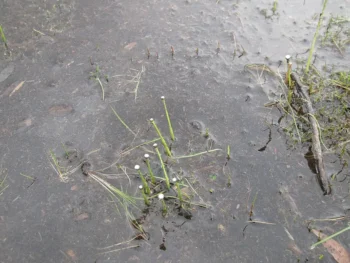
Estuary Pipewort: A Rare Wetland Gem for Specialized Gardens
If you’re looking to add a touch of delicate, understated beauty to your wetland garden, estuary pipewort (Eriocaulon parkeri) might just be the perfect choice. This charming little native plant brings subtle elegance to bog gardens and pond edges, though it’s definitely not your typical garden center find. Let’s dive into what makes this rare aquatic perennial so special and whether it deserves a spot in your landscape.
What is Estuary Pipewort?
Estuary pipewort, scientifically known as Eriocaulon parkeri, is a fascinating native perennial that belongs to the pipewort family. This modest little forb lacks woody tissue and produces tiny, button-like white flower heads that seem to float above grass-like foliage on slender stems. Don’t expect anything flashy – this plant’s charm lies in its quiet, naturalistic beauty.
You might also encounter this species listed under its synonyms Eriocaulon rollandii or Eriocaulon septangulare var. parkeri in older botanical references.
Where Does It Come From?
This delightful native calls eastern North America home, thriving naturally from the maritime provinces of Canada down to North Carolina. You’ll find it growing wild in states including New Brunswick, Quebec, Maine, Massachusetts, Connecticut, New York, New Jersey, Pennsylvania, Delaware, Maryland, Virginia, North Carolina, and even the District of Columbia.
- Species observed
- No observations
Important Conservation Note
Here’s where things get serious, fellow gardeners. Estuary pipewort carries a Global Conservation Status of S3, meaning it’s considered vulnerable throughout its range. In New Jersey, it’s even rarer with an S2 status. This means if you’re considering adding this beauty to your garden, you absolutely must source it responsibly from reputable native plant nurseries or conservation organizations – never collect it from the wild.
Why Grow Estuary Pipewort?
Despite its rarity (or perhaps because of it), there are compelling reasons to consider this native gem:
- It’s a true wetland specialist that thrives where many other plants struggle
- Provides authentic habitat for specialized wetland ecosystems
- Adds delicate texture and subtle seasonal interest to water features
- Supports conservation efforts by maintaining genetic diversity in cultivation
- Perfect for naturalistic, low-maintenance wetland gardens
Garden Design and Landscape Role
Estuary pipewort isn’t going to be the star of your perennial border – and that’s perfectly fine! This plant excels in specialized roles:
- Bog gardens and constructed wetlands
- Edges of natural or artificial ponds
- Rain gardens in consistently wet areas
- Native plant conservation collections
- Naturalistic water features
Think of it as nature’s own fine texture plant for wet areas, creating a soft, meadow-like appearance that complements showier wetland natives like cardinal flower or swamp milkweed.
Growing Conditions and Care
Here’s where estuary pipewort gets particular about its living arrangements. This plant is classified as an obligate wetland species across all regions where it grows, meaning it almost always occurs in wetlands and requires consistently wet conditions.
Essential growing requirements include:
- Constantly moist to saturated soil
- Acidic soil conditions
- Full sun to partial shade
- USDA hardiness zones 3-7
- Good water circulation if grown in constructed wetlands
Planting and Propagation Tips
Successfully establishing estuary pipewort requires patience and the right conditions. Since specific propagation information is limited, work closely with native plant specialists who have experience with wetland species. Generally, wetland plants like this can be grown from seed (when available) or careful divisions from established plants.
Key tips for success:
- Never let the soil dry out – ever
- Start small and be patient with establishment
- Consider growing in containers submerged in larger water features initially
- Source plants only from reputable native plant nurseries
The Bottom Line
Estuary pipewort is definitely a plant for specialized situations and dedicated native plant enthusiasts. If you have the right wetland conditions and can source it responsibly, it makes a wonderful addition to conservation-minded water gardens. However, if you’re new to wetland gardening or don’t have consistently wet conditions, you might want to start with more common native wetland plants like blue flag iris or swamp milkweed before tackling this rare beauty.
Remember, growing rare native plants like estuary pipewort is as much about conservation as it is about gardening. By cultivating it responsibly, you’re helping preserve this vulnerable species for future generations – and that’s something every nature-loving gardener can feel good about!