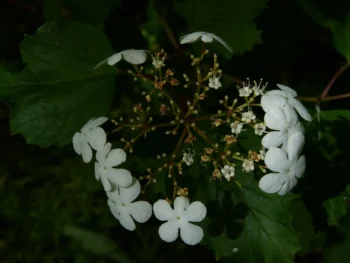
European Cranberrybush: A Striking Shrub with Seasonal Interest
If you’re looking for a shrub that puts on a show throughout multiple seasons, the European cranberrybush (Viburnum opulus) might catch your eye. This perennial woody plant offers white spring flowers, lush summer foliage, and bright red berries that birds absolutely love. But before you rush to the nursery, let’s dig into what makes this shrub tick and whether it’s the right fit for your garden.
What Exactly Is European Cranberrybush?
Despite its common name, European cranberrybush isn’t actually related to cranberries – it’s a viburnum! This multi-stemmed shrub typically reaches about 12 feet tall and wide at maturity, though it grows at a leisurely pace. The European part of its name is a dead giveaway about its origins – this plant hails from Europe, Asia, and northern Africa, not North America.
Native Status and Where It Grows
Here’s where things get a bit complicated. In North America, Viburnum opulus is only considered truly native to St. Pierre and Miquelon, those tiny French islands off Newfoundland. Everywhere else – from Alberta to Wyoming, from Maine to New Mexico – it’s essentially a non-native plant that has naturalized widely.
You’ll find European cranberrybush growing across most of Canada and much of the northern United States, thriving in a remarkable range of climates and conditions.
- Species observed
- No observations
The Visual Appeal
European cranberrybush earns its keep through sheer beauty. In late spring, it produces flat-topped clusters of small white flowers that create quite a spectacle. The dense green foliage provides excellent summer screening, and come fall, you’ll be treated to bright red berries that often persist well into winter. Some plants even offer decent fall color, with leaves turning yellow to reddish hues.
Growing Conditions That Make It Happy
This shrub is surprisingly adaptable, which partly explains its widespread distribution. Here’s what European cranberrybush prefers:
- Soil: Adaptable to fine and medium-textured soils, but skip the sandy stuff
- Moisture: Prefers consistent moisture – it’s even tolerant of wet conditions
- pH: Slightly acidic to neutral soils (5.2 to 7.0)
- Light: Shade tolerant, making it perfect for woodland edges
- Climate: Hardy to -38°F (USDA zones 3-7)
- Precipitation: Thrives with 30-50 inches annually
Wetland Warrior
One of European cranberrybush’s standout features is its relationship with water. Across most regions, it’s classified as Facultative Wetland, meaning it usually occurs in wetlands but can handle drier sites too. This makes it an excellent choice for rain gardens, pond edges, or those persistently damp spots in your yard where other shrubs might sulk.
Wildlife and Pollinator Benefits
The spring flowers attract various pollinators, including bees and flies, while the abundant red berries provide food for birds throughout fall and winter. The dense, multi-stemmed growth habit also offers excellent nesting sites for various bird species.
Garden Design Ideas
European cranberrybush works beautifully in several landscape settings:
- Mixed shrub borders for seasonal interest
- Woodland gardens where it can handle partial shade
- Rain gardens or bioswales
- Wildlife gardens focused on bird habitat
- Cottage-style gardens for a naturalized look
Planting and Care Tips
The good news? European cranberrybush is pretty low-maintenance once established.
- Planting: Available as container plants or bare-root specimens
- Spacing: Plan for 1,200-1,700 plants per acre if mass planting
- Establishment: Keep soil consistently moist the first year
- Pruning: Minimal pruning needed – just remove dead or damaged branches
- Fertilizing: Medium fertility requirements – annual compost application usually sufficient
Propagation Possibilities
If you want more plants, European cranberrybush can be grown from seed (about 13,600 seeds per pound!), though seedling vigor is relatively low. Seeds require cold stratification and fruit is abundant from summer through fall. You can also find it readily available at most nurseries.
Should You Plant It?
European cranberrybush offers undeniable beauty and wildlife value, plus it’s incredibly adaptable to different growing conditions. However, if you’re focused on supporting native ecosystems, you might want to consider native alternatives like American cranberrybush (Viburnum opulus var. americanum) or other native viburnums that provide similar benefits while supporting local wildlife more effectively.
That said, if you already have European cranberrybush in your landscape, there’s no need to remove it – just enjoy its seasonal show and the wildlife it attracts. For new plantings, consider whether a native alternative might better serve your garden goals while still providing the multi-season interest you’re after.