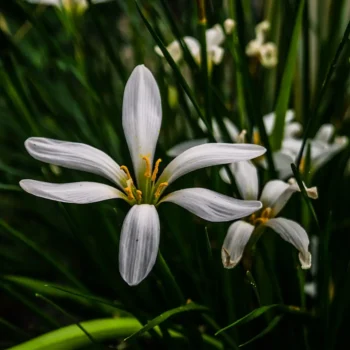
Evening Rainlily: A Fragrant Native Bulb That Blooms After Dark
If you’ve ever wished your garden could put on a magical nighttime show, the evening rainlily (Cooperia drummondii) might just be the plant you’ve been dreaming of. This charming native bulb has earned its poetic name by producing pristine white flowers that unfurl as the sun sets, releasing a sweet fragrance that drifts through the evening air.
What Makes Evening Rainlily Special
Evening rainlily is a true native treasure, naturally occurring across the south-central United States including Alabama, Arkansas, Kansas, Louisiana, Mississippi, New Mexico, Oklahoma, and Texas. This perennial bulb belongs to the amaryllis family and has quite the collection of botanical aliases – you might also see it listed as Cooperia chlorosolen, Zephyranthes brazosensis, or Zephyranthes herbertiana in older references.
- Species observed
- No observations
What sets this plant apart is its theatrical timing. True to its name, evening rainlily typically blooms in the evening hours, and often after rainfall – hence the rain in its common name. The flowers are pure white, funnel-shaped beauties that emerge from slender, grass-like foliage that grows in neat clumps.
Why Gardeners Love Evening Rainlily
There are several compelling reasons to consider adding evening rainlily to your landscape:
- Unique blooming schedule: Evening flowers add interest when most other plants are calling it a day
- Delightful fragrance: The sweet scent makes evening garden strolls even more enjoyable
- Low maintenance: Once established, this drought-tolerant native requires minimal care
- Wildlife value: Night-blooming flowers attract moths and other nocturnal pollinators
- Native plant benefits: Supports local ecosystems and is naturally adapted to regional conditions
A Note About Conservation
Before you rush to plant evening rainlily, there’s an important conservation consideration. In Arkansas, this species has a rarity status of S1S2, meaning it’s quite uncommon in that state. If you’re interested in growing evening rainlily, please source your bulbs from reputable nurseries that sell propagated plants rather than wild-collected specimens. This helps protect wild populations while still allowing gardeners to enjoy this lovely native.
Perfect Garden Settings
Evening rainlily thrives in several garden styles and situations:
- Prairie and wildflower gardens: Fits naturally among other native grasses and forbs
- Rain gardens: Its facultative upland status means it can handle both wet and dry conditions
- Evening gardens: Perfect for spaces designed to be enjoyed after sunset
- Xeriscapes: Drought tolerance makes it ideal for water-wise landscaping
- Naturalized areas: Great for low-maintenance, natural-looking plantings
Growing Conditions and Care
Evening rainlily is refreshingly easy to grow once you understand its preferences:
Climate: Hardy in USDA zones 7-10, making it suitable for much of the southern United States.
Soil: Prefers well-draining soil but adapts to various soil types. The plant’s facultative upland status means it usually grows in non-wetland areas but can tolerate occasional wet conditions.
Light: Performs best in full sun to partial shade.
Water: Drought tolerant once established, but may bloom more reliably with occasional deep watering during dry spells.
Planting and Maintenance Tips
Getting evening rainlily established in your garden is straightforward:
- Plant bulbs 2-3 inches deep in fall or early spring
- Space bulbs 4-6 inches apart to allow for natural spreading
- Water regularly during the first growing season to establish strong roots
- Allow foliage to die back naturally – it’s feeding the bulb for next year’s show
- Divide overcrowded clumps every 3-4 years in fall
- Minimal fertilization needed – these natives are adapted to lean soils
Wildlife Benefits
Evening rainlily plays a modest but meaningful role in supporting wildlife. According to research, it provides about 5-10% of the diet for large animals, though they don’t typically use it for cover. More importantly for gardeners, the night-blooming flowers attract moths and other nocturnal pollinators, adding to your garden’s biodiversity.
The Bottom Line
Evening rainlily offers something truly special – the magic of flowers that open as darkness falls, filling the air with sweet fragrance. For gardeners who want to support native plants while enjoying unique evening beauty, this little bulb delivers in spades. Just remember to source your plants responsibly, and you’ll be rewarded with years of enchanting nighttime blooms that make every evening in the garden feel like a special occasion.
Whether you’re creating a moon garden, adding to a prairie planting, or simply want something different for your landscape, evening rainlily brings both ecological value and pure garden charm to any setting lucky enough to host it.