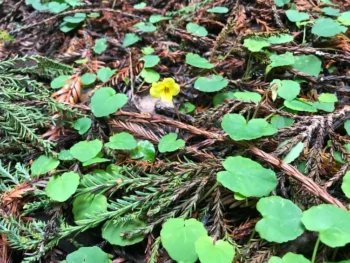
Evergreen Violet: A Charming Native Groundcover for Your Shade Garden
If you’re searching for a delightful native groundcover that thrives in those tricky shaded spots, meet the evergreen violet (Viola sempervirens). This charming little perennial might just become your new favorite woodland companion, bringing year-round interest and subtle beauty to your garden’s quieter corners.
What Makes Evergreen Violet Special?
Don’t let the name fool you – while this violet does maintain its foliage through much of the year in milder climates, it’s the combination of heart-shaped leaves and cheerful yellow flowers that really steals the show. Unlike many of its purple-flowered violet cousins, evergreen violet sports sunny yellow blooms that appear in spring, creating a lovely carpet of color beneath trees and shrubs.
As a true native of western North America, this herbaceous perennial has been quietly carpeting forest floors from Alaska down to California, and inland to Idaho. You’ll find it naturally occurring in British Columbia, Alaska, California, Idaho, Oregon, and Washington, where it has adapted beautifully to the region’s diverse growing conditions.
- Species observed
- No observations
Why Your Garden Will Love Evergreen Violet
This low-growing groundcover brings several benefits to your landscape:
- Native plant benefits: Supports local ecosystems and requires less water once established
- Pollinator friendly: The spring flowers attract native bees and other beneficial insects
- Wildlife value: Serves as a host plant for fritillary butterfly caterpillars
- Low maintenance: Once established, it’s remarkably self-sufficient
- Spreading habit: Naturally fills in bare spots through underground runners
Perfect Places to Plant
Evergreen violet shines in several garden settings:
- Woodland gardens and naturalized areas
- Shaded rock gardens
- Under trees and large shrubs
- Native plant gardens
- Erosion control on gentle slopes
Growing Conditions and Care
One of the best things about evergreen violet is how accommodating it can be. This hardy perennial thrives in USDA zones 4-8, making it suitable for a wide range of climates. Here’s what it prefers:
Light: Partial to full shade – perfect for those spots where sun-loving plants struggle
Soil: Moist, well-draining soil, though it adapts to various soil types. It’s not particularly fussy about pH levels
Water: Consistent moisture is appreciated, especially during establishment, but it can tolerate some drought once settled in
Planting and Care Tips
Getting started with evergreen violet is refreshingly straightforward:
- Plant in spring or fall when temperatures are moderate
- Space plants about 6-12 inches apart if you want quicker coverage
- Water regularly during the first growing season to help establish roots
- Once established, minimal care is needed – just occasional watering during dry spells
- No need for fertilizer; this native is adapted to natural soil conditions
- Allow it to spread naturally, or divide clumps every few years if you want to control its spread
A Few Things to Keep in Mind
Like many groundcovers, evergreen violet can spread via runners, so give it room to roam or be prepared to manage its boundaries if space is limited. This spreading habit is generally considered a feature rather than a problem, as it helps create that lush, natural woodland look many gardeners desire.
The plant may also be found listed under its synonym, Viola sarmentosa, so don’t be confused if you see both names used interchangeably.
The Bottom Line
Evergreen violet offers native plant enthusiasts and shade gardeners alike a wonderful opportunity to add both beauty and ecological value to their landscapes. With its cheerful yellow flowers, attractive foliage, and low-maintenance nature, it’s an excellent choice for anyone looking to create a more naturalized, wildlife-friendly garden space. Plus, there’s something deeply satisfying about growing a plant that’s perfectly adapted to your local environment – it just feels right.