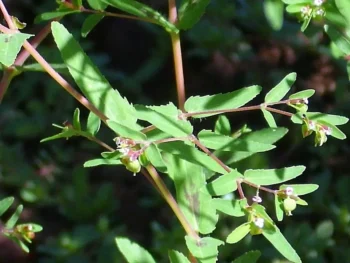
Eyebane: The Humble Native You’ve Probably Already Met
If you’ve ever noticed a small, sprawling plant with tiny leaves hugging the ground in your garden paths or popping up in disturbed soil, you’ve likely made the acquaintance of eyebane (Chamaesyce nutans). This unassuming little native might not win any beauty contests, but it’s got some interesting stories to tell about resilience and adaptation in the plant world.
What Exactly Is Eyebane?
Eyebane goes by the botanical name Chamaesyce nutans, though you might also encounter it listed under several synonyms including Euphorbia nutans. This little forb – that’s botanist-speak for a non-woody plant – can live as either an annual or perennial, depending on growing conditions. It’s a member of the spurge family, which explains its milky sap and tiny, inconspicuous flowers.
The plant gets its common name eyebane from historical folk uses, though we definitely don’t recommend experimenting with any medicinal applications!
Where You’ll Find This Native Wanderer
Eyebane is impressively widespread across North America. It’s native to Canada, the lower 48 states, Puerto Rico, and the U.S. Virgin Islands. You can spot it growing wild in states from coast to coast, including Alabama, Arkansas, California, Connecticut, Delaware, Florida, Georgia, Illinois, Indiana, Iowa, Kansas, Kentucky, Louisiana, Maryland, Massachusetts, Michigan, Minnesota, Mississippi, Missouri, Nebraska, New Hampshire, New Jersey, New Mexico, New York, North Carolina, North Dakota, Ohio, Oklahoma, Pennsylvania, Rhode Island, South Carolina, South Dakota, Tennessee, Texas, Virginia, West Virginia, Wisconsin, and Wyoming.
- Species observed
- No observations
Spotting Eyebane in Your Garden
Eyebane is a low-growing plant that tends to spread along the ground rather than reaching for the sky. You’ll typically find it in:
- Disturbed soil areas
- Garden paths and walkways
- Edges of cultivated beds
- Open, sunny spots with well-draining soil
The plant produces tiny white flowers that are barely noticeable – this isn’t a showstopper in the ornamental department. Its small, oval leaves often have a reddish tinge, especially in cooler weather or stressed conditions.
Growing Conditions and Hardiness
One thing you can say about eyebane – it’s not picky! This adaptable native thrives in a wide range of USDA hardiness zones, likely spanning zones 3 through 10 given its extensive geographic range. It prefers:
- Full sun exposure
- Well-draining soils (it’s quite drought tolerant once established)
- Various soil types, from sandy to clay
According to wetland indicators, eyebane typically prefers non-wetland conditions but can tolerate some moisture variation, earning it a facultative upland status in most regions.
Should You Grow Eyebane?
Here’s where things get interesting. Eyebane isn’t typically something you’d plant on purpose – it’s more likely to plant itself! While it’s a native species and therefore has ecological value, it’s generally considered more of a pioneer plant that appears in disturbed areas rather than a garden ornamental.
If you’re aiming for a wild or naturalized garden aesthetic, you might choose to let eyebane do its thing where it appears naturally. However, if you’re looking for native plants with more visual impact, you might want to consider more ornamental alternatives that provide better wildlife benefits and aesthetic appeal.
Managing Eyebane
Since eyebane often shows up uninvited, you’re more likely to be managing it than actively growing it. If you want to keep it around:
- Simply let it be – it requires virtually no care
- It will likely self-seed and return each growing season
- Avoid overwatering, as it prefers drier conditions
If you’d rather encourage other plants in its place, eyebane is relatively easy to remove by hand-pulling, especially when the soil is moist.
The Bottom Line on Eyebane
Eyebane might not be the native plant that gets gardeners excited, but it’s a testament to the adaptability and persistence of our native flora. While it won’t transform your landscape with stunning blooms or dramatic foliage, it represents the often-overlooked natives that quietly fill ecological niches in our gardens and wild spaces.
Whether you choose to welcome eyebane or gently encourage it to grow elsewhere, understanding this common native helps you become a more informed steward of your local ecosystem. Sometimes the most humble plants have the most interesting stories to tell!