Fairy Slipper: The Enchanting Wild Orchid You Should Admire (But Probably Not Grow)
Have you ever stumbled upon a delicate pink orchid blooming in the forest and wondered what magical creature left it behind? Meet the fairy slipper (Calypso bulbosa), one of North America’s most enchanting native orchids. This petite beauty might look like something from a fairy tale, but it’s got some very real requirements that make it a challenge for even the most dedicated gardeners.
What Makes the Fairy Slipper Special?
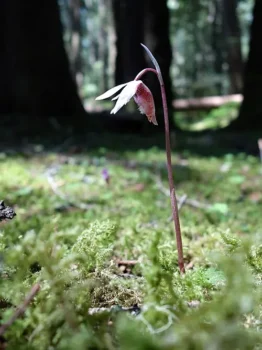
The fairy slipper is a perennial forb – essentially an herbaceous plant without woody stems – that belongs to the orchid family. True to its whimsical name, this little charmer produces a single, distinctive pink flower with a pouch-like slipper that would make Cinderella jealous. The bloom sits atop a slender stem, usually reaching just 3-6 inches tall, accompanied by a single, oval leaf that emerges from the forest floor.
What really sets this orchid apart is its ethereal beauty. The flower features delicate pink petals and sepals with intricate purple markings, while the inflated lip (the slipper part) often displays yellow spots and purple veining. It’s like nature’s own piece of jewelry scattered across the forest floor.
Where Does the Fairy Slipper Call Home?
This remarkable orchid is native to a vast territory spanning Alaska, Canada, and many of the lower 48 states. You can find fairy slippers growing naturally across an impressive range including Alberta, British Columbia, Alaska, Manitoba, New Brunswick, Arizona, California, Nova Scotia, Ontario, Colorado, Quebec, Saskatchewan, Yukon, Northwest Territories, Nunavut, Idaho, Maine, Michigan, Minnesota, Montana, New Hampshire, New Mexico, New York, Oregon, South Dakota, Utah, Vermont, Washington, Wisconsin, Wyoming, and Newfoundland.
- Species observed
- No observations
The fairy slipper thrives in USDA hardiness zones 2-7, preferring the cool, moist conditions of northern boreal and montane forests.
Why You Probably Shouldn’t Try to Grow It
Here’s where we need to have an honest conversation. While the fairy slipper is absolutely stunning and completely native across much of North America, it’s also one of the most challenging plants you could ever attempt to cultivate. This isn’t about your gardening skills – it’s about biology.
Fairy slippers have an intricate relationship with specific soil fungi (mycorrhizae) that they depend on for survival. These fungal partnerships help the orchid absorb nutrients and water, and without them, the plant simply cannot survive. Additionally, these orchids require very specific conditions:
- Cool, consistently moist but well-draining acidic soil
- Partial to full shade
- Stable soil temperatures
- Undisturbed root systems
- The presence of their fungal partners
Even experienced orchid growers typically avoid attempting to cultivate wild orchids like the fairy slipper because success rates are extremely low, and harvesting them from the wild can harm wild populations.
How to Appreciate Fairy Slippers Responsibly
Instead of trying to bring fairy slippers into your garden, consider these alternatives:
- Enjoy them in their natural habitat: Take photos and admire them during woodland hikes
- Support conservation efforts: Contribute to organizations that protect native plant habitats
- Create habitat for other native orchids: Some native orchids are more garden-friendly
- Plant other native woodland beauties: Consider trilliums, wild ginger, or bloodroot for similar woodland appeal
Wetland Connections and Wildlife Benefits
Fairy slippers have an interesting relationship with moisture. Depending on the region, they’re classified as facultative to facultative wetland plants, meaning they can grow in both wetland and non-wetland environments but often prefer moist conditions. In some areas, they typically occur in wetlands, while in others, they’re more common in upland forest settings.
While small, fairy slippers do provide benefits to pollinators, particularly small bees and other insects that can navigate their intricate flower structure. They’re part of the complex web of native plants that support local ecosystems.
The Bottom Line
The fairy slipper is truly one of nature’s gems – a native orchid that brings magic to northern forests across North America. While the temptation to add this beauty to your garden might be strong, the kindest thing you can do is admire it from afar and work to protect the wild spaces where it thrives.
Instead of attempting to cultivate fairy slippers, focus on creating habitat for other native plants that are better suited to garden life. Your local native plant society can recommend beautiful alternatives that will bring similar woodland charm to your landscape without the ecological concerns.
Sometimes the most beautiful plants are meant to stay wild – and that’s perfectly okay. The fairy slipper’s true magic lies in its ability to surprise and delight us during those special moments when we encounter it in its natural forest home.