Fairy Slipper: The Elusive Native Orchid You Should Admire (But Not Dig Up)
Meet one of North America’s most enchanting native orchids: the fairy slipper (Calypso bulbosa var. americana). This tiny woodland treasure is like finding a hidden gem during a forest hike – absolutely magical to encounter, but definitely not something you should try to take home.
What Makes the Fairy Slipper So Special?
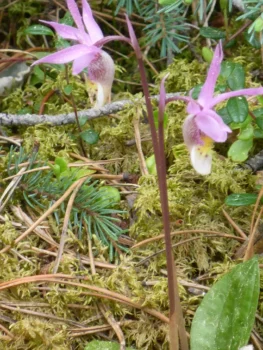
The fairy slipper is a perennial forb that belongs to the orchid family, and boy, does it live up to its whimsical name! This little beauty produces a single, delicate flower that looks exactly like a tiny pink and purple slipper dangling from a slender stem. The flower features a distinctive white lip decorated with purple spots and streaks – nature’s own artwork that would make any fairy proud.
Each plant produces just one heart-shaped leaf that emerges from the forest floor, making it look like the plant is wearing a green collar to complement its fancy footwear. Standing only 3-6 inches tall, this diminutive orchid packs a serious visual punch despite its small stature.
Where Does the Fairy Slipper Call Home?
This remarkable native orchid has quite the impressive range across North America. You can find fairy slippers growing wild in Alaska, throughout Canada (including Alberta, British Columbia, Manitoba, New Brunswick, Nova Scotia, Ontario, Quebec, Saskatchewan, Yukon, Northwest Territories, Nunavut, and Newfoundland), and in several northern U.S. states including Arizona, Colorado, Maine, Michigan, Minnesota, Montana, New Hampshire, New Mexico, New York, South Dakota, Utah, Vermont, Wisconsin, and Wyoming.
- Species observed
- No observations
Why You Shouldn’t Try to Grow Fairy Slippers (Even Though You’ll Want To)
Here’s where we need to have a heart-to-heart conversation. While fairy slippers are absolutely stunning and you might be tempted to dig one up for your shade garden, this is one native plant that’s better left undisturbed. Here’s why:
- Extremely difficult to cultivate: Fairy slippers have complex relationships with specific soil fungi (mycorrhizae) that are nearly impossible to replicate in garden settings
- Very slow growing: These orchids can take 4-5 years just to produce their first flower
- Specific habitat needs: They require cool, consistently moist, acidic soil with perfect drainage and specific light conditions
- Conservation concerns: While not officially listed as rare, fairy slipper populations are declining due to habitat loss and collection pressure
Their Ideal Growing Conditions (In the Wild)
Fairy slippers thrive in USDA hardiness zones 2-6, preferring the cool, humid conditions of:
- Coniferous and mixed forests
- Mossy, acidic soil rich in organic matter
- Partial to full shade
- Consistent moisture without waterlogging
- Cool temperatures and high humidity
Supporting Pollinators the Fairy Slipper Way
While you can’t grow fairy slippers at home, they do provide valuable nectar for small native bees and flies in their natural habitat. The flowers have evolved a fascinating pollination strategy where insects must crawl through the slipper-shaped bloom to reach the nectar, ensuring they pick up pollen along the way.
How to Enjoy Fairy Slippers Responsibly
Instead of trying to transplant these woodland gems, here’s how you can appreciate and support them:
- Go orchid hunting: Learn to identify fairy slippers and enjoy finding them on nature hikes
- Take photos, not plants: Capture their beauty with your camera instead of your shovel
- Support habitat conservation: Donate to organizations protecting old-growth forests
- Choose garden-friendly alternatives: Plant other native shade perennials like wild ginger, mayapple, or trilliums
The Bottom Line
Fairy slippers are one of those special plants that remind us that not everything in nature needs to be tamed for our gardens. Sometimes the most beautiful gift we can give ourselves – and these remarkable orchids – is simply learning to appreciate them where they naturally belong. Trust us, stumbling across a fairy slipper during a woodland walk is far more magical than watching one slowly die in your backyard.
So next time you’re hiking through northern forests, keep your eyes peeled for these tiny woodland fairies. Just remember: look, marvel, photograph, and leave only footprints behind!