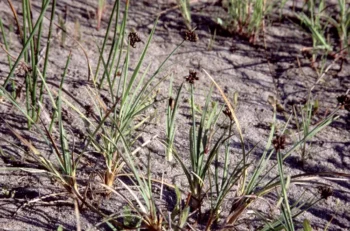
Falcate Rush: A Graceful Native for Wet Gardens
If you’ve been searching for a native plant that thrives in those soggy spots where other plants fear to tread, let me introduce you to the falcate rush (Juncus falcatus). This unassuming perennial might not win any flashy flower contests, but it’s got character, resilience, and a quiet beauty that grows on you—literally and figuratively.
What Makes Falcate Rush Special?
Falcate rush is a graminoid, which is just a fancy way of saying it’s grass-like but not actually a grass. It belongs to the rush family (Juncaceae), and like its cousins, it’s perfectly content in wet conditions where many other plants would throw in the towel. The falcate part of its name refers to the curved, sickle-like shape of its seed heads—a subtle but distinctive feature that adds gentle movement to the garden.
This native beauty calls the western regions of North America home, naturally occurring across British Columbia, Alaska, California, Oregon, and Washington. It’s a true Pacific Northwest native that has adapted to everything from coastal wetlands to mountain meadows.
- Species observed
- No observations
Garden Appeal and Landscape Role
Don’t expect falcate rush to steal the show with showy blooms, but that’s not really the point. This plant is all about texture, structure, and functionality. Its slender, arching stems create gentle vertical lines that soften harsh edges and add movement when the breeze picks up. The curved seed heads provide subtle seasonal interest, especially when backlit by morning or evening sun.
In the landscape, falcate rush serves as an excellent supporting player. It’s perfect for:
- Rain gardens and bioswales
- Pond and stream margins
- Naturalistic wetland plantings
- Erosion control on slopes with seasonal moisture
- Creating textural contrast in perennial borders
Growing Conditions and Care
Here’s where falcate rush really shines—it’s wonderfully low-maintenance once you understand its preferences. This plant has a Facultative Wetland status, meaning it usually occurs in wetlands but can tolerate drier conditions occasionally.
Ideal growing conditions include:
- Consistently moist to wet soil (it can handle seasonal flooding)
- Full sun to partial shade
- USDA hardiness zones 3-9
- Clay, loam, or sandy soils—it’s not picky about soil type as long as moisture is adequate
Planting and Care Tips
Getting falcate rush established is refreshingly straightforward. Plant it in spring or fall when temperatures are moderate and rainfall is typically more reliable. Space plants about 12-18 inches apart if you’re creating a mass planting.
The key to success is moisture management. During the first growing season, keep the soil consistently moist (but don’t worry—this plant can handle waterlogged conditions that would kill many others). Once established, it’s remarkably drought-tolerant for short periods, though it performs best with regular moisture.
Maintenance is minimal. You can cut back old growth in late winter or early spring if you prefer a tidier look, but many gardeners leave the seed heads for winter interest and wildlife habitat.
Wildlife and Ecological Benefits
While falcate rush isn’t a pollinator magnet (it’s wind-pollinated), it provides valuable habitat and food for other wildlife. The dense growth offers shelter for small animals and birds, and the seeds provide food for waterfowl and other seed-eating birds. The plant’s root system also helps stabilize soil and filter water runoff—making it an excellent choice for environmentally conscious gardeners.
Is Falcate Rush Right for Your Garden?
Falcate rush is perfect for gardeners who appreciate subtle beauty and want to support native ecosystems. It’s an excellent choice if you have wet areas in your landscape, want to create a rain garden, or simply love the texture and movement that grasses and grass-like plants bring to the garden.
However, it might not be the best choice if you’re looking for showy flowers or bold architectural statements. This is a plant for gardeners who understand that sometimes the most valuable players are the ones working quietly in the background, making everything else look better.
Consider falcate rush as nature’s way of saying that beauty doesn’t always have to shout—sometimes a gentle whisper is exactly what your garden needs.