False Aloe: The Native Succulent That’s Surprisingly Easy to Grow
If you’re looking for a drought-tolerant native plant that looks like it belongs in a desert but actually calls the American Southeast home, meet false aloe (Manfreda virginica). Despite its common name, this isn’t a true aloe at all – it’s a uniquely American succulent that brings southwestern vibes to gardens across the eastern United States.
What Makes False Aloe Special?
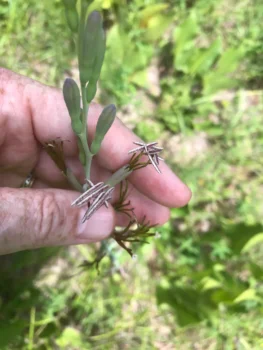
False aloe is a perennial forb that forms attractive rosettes of thick, fleshy leaves. The blue-green to gray-green foliage often features striking dark spots or mottled patterns that make each plant look like a piece of living art. But the real showstopper comes in summer when tall flower spikes emerge, reaching up to 6 feet high and producing clusters of fragrant, tubular blooms that smell sweetly of vanilla in the evening.
This native beauty has quite the collection of aliases – you might also see it sold under former scientific names like Agave virginica or Polianthes virginica, reflecting its close relationship to agaves and other succulent plants.
Where False Aloe Calls Home
As a native species to the lower 48 states, false aloe naturally occurs across a impressive range spanning 19 states. You’ll find wild populations thriving from Texas and Oklahoma in the west, up through the Ohio River Valley, and down to Florida in the southeast. States where it grows naturally include Alabama, Arkansas, Florida, Georgia, Illinois, Indiana, Kentucky, Louisiana, Maryland, Mississippi, Missouri, North Carolina, Ohio, Oklahoma, South Carolina, Tennessee, Texas, Virginia, and West Virginia.
- Species observed
- No observations
Why Gardeners Love False Aloe
There are several compelling reasons to consider adding false aloe to your landscape:
- Drought tolerance: Once established, this plant thrives with minimal watering
- Native pollinator support: The fragrant flowers attract moths, butterflies, and hummingbirds
- Unique texture: Provides architectural interest with its succulent rosette form
- Low maintenance: Requires very little care once settled in
- Long blooming period: Flowers persist through much of the summer
- Cold hardy: Survives winters in USDA zones 6-10
Perfect Garden Situations for False Aloe
False aloe shines in several garden settings:
- Rock gardens: Its succulent form complements stone and gravel perfectly
- Xeriscaping: An excellent choice for water-wise landscaping
- Native plant gardens: Supports local ecosystems and wildlife
- Accent plantings: Makes a striking focal point or border plant
- Slope plantings: Helps prevent erosion on challenging sites
Growing False Aloe Successfully
The secret to happy false aloe is thinking desert plant even though it’s from the Southeast. Here’s how to grow it successfully:
Location and Light: Choose a spot with full sun to partial shade. While it can handle some shade, you’ll get the best flowering and most compact growth in brighter locations.
Soil Requirements: The most critical factor is drainage. False aloe absolutely must have well-draining soil – soggy conditions will quickly kill it. Sandy or rocky soils work wonderfully, and you can amend heavy clay by adding coarse sand, perlite, or gravel.
Planting Tips: Plant in spring after the last frost. Dig a hole no deeper than the root ball and twice as wide. Position the plant so the crown sits slightly above the surrounding soil level to prevent water from pooling around the base.
Watering Wisdom: Water regularly the first year to help establish roots, then reduce frequency dramatically. Mature plants rarely need supplemental watering except during extreme drought.
Winter Care: In zones 6-7, apply a light mulch around (but not touching) the plant in late fall for extra winter protection. Remove mulch in early spring to prevent crown rot.
Wildlife and Pollinator Benefits
One of the best reasons to grow false aloe is its value to native wildlife. The evening-fragrant flowers are perfectly designed to attract night-flying moths, which are crucial pollinators often overlooked in garden planning. During the day, butterflies and hummingbirds also visit the blooms for nectar. By choosing this native plant over non-native succulents, you’re directly supporting local ecosystems and food webs.
Common Growing Challenges
False aloe is generally trouble-free, but watch out for these potential issues:
- Overwatering: The number one killer – when in doubt, don’t water
- Poor drainage: Leads to root rot, especially in winter
- Crown rot: Can occur if mulch is piled against the plant base
The Bottom Line
False aloe proves that native plants can be just as exotic and striking as imports from far-off places. With its architectural form, drought tolerance, and pollinator appeal, it’s an excellent choice for gardeners wanting to create water-wise landscapes that support local wildlife. Plus, there’s something deeply satisfying about growing a plant that’s been thriving in your region for thousands of years – it’s like welcoming an old friend home to your garden.