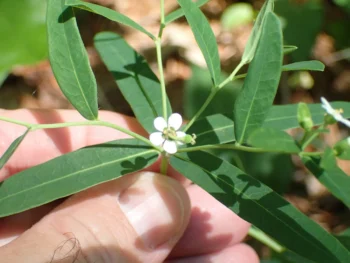
False Flowering Spurge: A Quiet Native with Surprising Garden Value
If you’re looking for a native plant that won’t steal the show but will quietly support your local ecosystem, false flowering spurge (Euphorbia pubentissima) might be just what your garden needs. This unassuming perennial may not win any beauty contests, but it’s a dependable workhorse that deserves consideration for naturalistic gardens and native plant enthusiasts.
What Is False Flowering Spurge?
False flowering spurge is a native perennial forb—essentially a non-woody herbaceous plant that comes back year after year. Don’t let the false flowering part confuse you; this plant does produce real flowers, just small white ones that appear in delicate clusters. The name likely refers to its similarity to other spurges or its modest floral display compared to showier relatives.
As a member of the large Euphorbia family, this plant shares characteristics with other spurges, including a milky sap that can be irritating to skin (more on that later).
Where False Flowering Spurge Grows Naturally
This truly American native calls a significant portion of the eastern and southeastern United States home. You’ll find it growing naturally across 20 states, from Pennsylvania down to Florida and west to Texas, with populations scattered as far north as New Hampshire and as far west as Oklahoma and Missouri.
- Species observed
- No observations
Should You Plant False Flowering Spurge?
Here’s the honest truth: false flowering spurge isn’t going to be the star of your garden border. But there are several compelling reasons why you might want to include it in your landscape:
- Native credentials: It’s genuinely native across much of the eastern U.S., supporting local ecosystems
- Low maintenance: Once established, it’s quite drought tolerant and requires minimal care
- Wildlife support: While not a major food source, it does provide sustenance for some birds and serves as habitat
- Naturalistic appeal: Perfect for prairie restorations, wildflower meadows, and native plant gardens
- Pollinator attraction: The small flowers attract beneficial insects and native bees
Garden Design and Landscape Role
False flowering spurge works best in naturalistic settings rather than formal garden beds. Consider it for:
- Native plant gardens where authenticity matters more than flashy blooms
- Prairie or meadow restorations
- Woodland edge plantings
- Butterfly and pollinator gardens as a supporting player
- Areas where you want low-maintenance native groundcover
This plant typically reaches 1-3 feet in height and spreads gradually, making it useful for filling in naturalistic plantings without being aggressive.
Growing Conditions and Care
One of false flowering spurge’s best qualities is its easy-going nature. Here’s what it prefers:
- Light: Full sun to partial shade (quite adaptable)
- Soil: Well-drained soils; adaptable to various soil types
- Water: Drought tolerant once established; doesn’t like wet feet
- Hardiness: Zones 6-9, based on its natural range
Planting and Care Tips
Growing false flowering spurge is refreshingly straightforward:
- Planting: Spring or fall planting works well; space plants 18-24 inches apart
- Establishment: Water regularly the first season, then let nature take over
- Maintenance: Minimal pruning needed; cut back in late fall or early spring if desired
- Propagation: May self-seed in optimal conditions; can be divided in spring
Important Safety Note
Like all members of the Euphorbia family, false flowering spurge produces a milky sap that can be irritating to skin and eyes. Always wear gloves when handling the plant, and keep it away from children and pets who might be tempted to sample it.
Wildlife and Pollinator Benefits
While research shows that false flowering spurge isn’t a major wildlife food source (providing only 2-5% of large animals’ diets and 5-10% for some birds), every bit counts in supporting biodiversity. The flowers attract small pollinators and beneficial insects, contributing to the complex web of garden ecology.
The Bottom Line
False flowering spurge won’t win any garden beauty contests, but it’s exactly the kind of steady, reliable native that helps create authentic, sustainable landscapes. If you’re building a native plant garden, restoring natural habitat, or simply want to support local wildlife with minimal effort, this quiet performer deserves a spot in your landscape.
Think of it as the dependable friend of the plant world—not the most exciting, perhaps, but always there when you need it, asking for very little in return.