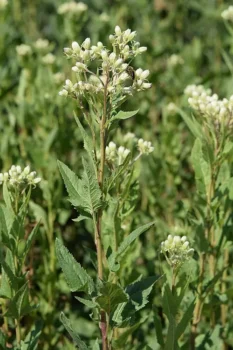
False Indian Plantain: A Late-Blooming Native Gem for Shade Gardens
If you’re looking for a native perennial that brings late-season interest to your shade garden, false Indian plantain (Hasteola suaveolens) might just be the perfect addition. This charming woodland native offers fragrant white flowers when most other plants are winding down for the season, making it a valuable player in any native landscape design.
What is False Indian Plantain?
False Indian plantain is a native perennial forb that belongs to the sunflower family. Despite its common name, it’s not related to true plantains at all. This herbaceous plant lacks woody tissue above ground and dies back to its roots each winter, emerging fresh each spring. You might also encounter it in older gardening references under its former scientific names, including Cacalia suaveolens or Senecio suaveolens.
Where Does It Grow Naturally?
This native beauty calls eastern North America home, naturally occurring across 22 states from Maine down to Georgia and west to Minnesota and Missouri. You’ll find it growing wild in Connecticut, District of Columbia, Georgia, Illinois, Indiana, Iowa, Kentucky, Maine, Maryland, Massachusetts, Minnesota, Missouri, New Jersey, New York, North Carolina, Ohio, Pennsylvania, Rhode Island, Tennessee, Virginia, West Virginia, and Wisconsin.
- Species observed
- No observations
A Word About Rarity
Before you rush to plant false Indian plantain, there’s something important to know: this species has become quite rare in some areas. In New Jersey, it’s listed as Highlands Listed, SX.1, indicating it’s extremely rare or possibly extirpated from the state. If you’re interested in growing this native gem, please source your plants or seeds responsibly from reputable native plant nurseries rather than collecting from wild populations.
What Does It Look Like?
False Indian plantain grows as an upright perennial with large, heart-shaped leaves that create an attractive backdrop in shade gardens. Come late summer and early fall, it produces clusters of small, white, sweetly fragrant flowers that seem to glow in the dappled light of woodland settings. The plant typically reaches 3-5 feet tall and spreads about 2-3 feet wide at maturity.
Perfect Growing Conditions
This adaptable native thrives in conditions that mimic its natural woodland habitat:
- Light: Partial shade to full shade
- Soil: Moist to wet soils; tolerates various soil types
- Water: Consistent moisture preferred
- USDA Zones: Hardy in zones 4-8
Its wetland status as Facultative Wetland across all regions means it usually grows in wetlands but can adapt to non-wetland conditions, making it quite versatile for different garden situations.
Why Grow False Indian Plantain?
There are several compelling reasons to include this native in your landscape:
- Late-season pollinator support: When most flowers have finished blooming, false Indian plantain provides crucial nectar for butterflies, bees, and other pollinators preparing for winter
- Low maintenance: Once established, it requires minimal care and can even self-seed in favorable conditions
- Shade tolerance: Perfect for those challenging shady spots where many flowering plants struggle
- Native ecosystem support: As a native species, it supports local wildlife and fits naturally into regional ecosystems
Ideal Garden Settings
False Indian plantain works beautifully in:
- Woodland gardens
- Rain gardens and bioswales
- Naturalized landscape areas
- Native plant gardens
- Shade perennial borders
Planting and Care Tips
Growing false Indian plantain successfully is relatively straightforward:
- Planting: Plant in spring after the last frost, spacing plants 2-3 feet apart
- Watering: Keep soil consistently moist, especially during establishment
- Fertilizing: Generally unnecessary; native plants prefer lean soils
- Maintenance: Deadhead spent flowers to prevent excessive self-seeding, or leave them for wildlife
- Winter care: Cut back dead foliage in late fall or early spring
The Bottom Line
False Indian plantain offers shade gardeners a wonderful opportunity to grow a truly native species that provides late-season beauty and important pollinator resources. While its rarity in some regions means we should be thoughtful about sourcing, growing this perennial in our gardens can actually help preserve the species while supporting local ecosystems. Just remember to buy from reputable native plant sources, and you’ll have a low-maintenance, ecologically valuable addition to your shade garden that will reward you with fragrant blooms when you need them most.