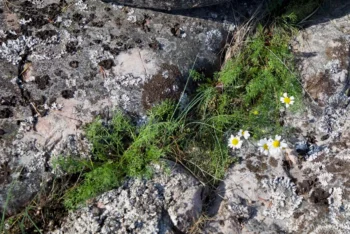
False Mayweed: A Hardy Coastal Native with Daisy Charm
Meet false mayweed (Tripleurospermum maritimum), a plucky little wildflower that’s as tough as it sounds unassuming. Don’t let the name fool you – while it might be called false, there’s nothing fake about this plant’s ability to thrive in some of the harshest conditions nature can dish out.
What Is False Mayweed?
False mayweed is a hardy herbaceous plant that can live as an annual, biennial, or perennial depending on growing conditions. This adaptable forb produces charming white, daisy-like flowers with bright yellow centers that seem to smile up from their feathery, fern-like foliage. The plant forms low-growing mats that hug the ground, making it an excellent ground cover option for challenging sites.
Where Does False Mayweed Call Home?
This resilient plant is native to the Arctic and subarctic regions of North America, thriving naturally in Alaska, northern Canada, and Greenland. It has also established itself across a surprisingly wide range of locations, from the coastal areas of California and Oregon to the northeastern states like Maine, Massachusetts, and Connecticut, and even reaching into the Canadian provinces of Manitoba, Ontario, Quebec, and the Maritime provinces.
- Species observed
- No observations
Should You Plant False Mayweed?
The answer depends on where you live and what you’re hoping to achieve in your garden. Here’s what to consider:
The Good News
- Ultra-hardy: This plant laughs in the face of harsh conditions, tolerating poor soils, salt spray, and extreme weather
- Low maintenance: Once established, it pretty much takes care of itself
- Pollinator friendly: The small daisy flowers attract beneficial insects, flies, and small native bees
- Versatile growing conditions: Adapts to both wetland and upland sites depending on your region
- Extended bloom: Flowers can appear throughout the growing season
Things to Keep in Mind
- Self-seeding nature: False mayweed readily produces seeds and can spread beyond where you originally planted it
- Regional considerations: While native to northern areas, its status varies in different regions
- Growth habit: The mat-forming tendency means it can cover more ground than you might expect
Perfect Spots for False Mayweed
This plant shines in specific garden situations:
- Coastal gardens: Its salt tolerance makes it perfect for seaside plantings
- Rock gardens: The low-growing habit and drought tolerance suit rocky, well-drained sites
- Native plant gardens: Especially appropriate in northern and coastal native landscapes
- Difficult sites: Those problem areas where other plants struggle
- Naturalized meadows: Adds delicate texture to wildflower plantings
Growing False Mayweed Successfully
Hardiness and Climate
False mayweed thrives in USDA hardiness zones 2-7, making it suitable for cooler climates. It’s particularly well-adapted to areas with cool, moist summers and cold winters.
Site Requirements
- Sunlight: Full sun produces the best flowering and most compact growth
- Soil: Well-drained soils are essential, but it tolerates poor, sandy, or rocky conditions
- Moisture: Drought tolerant once established, though it can handle varying moisture levels
- pH: Adaptable to a range of soil pH levels
Planting and Care Tips
- Starting: Can be grown from seed sown directly in fall or early spring
- Spacing: Allow 12-18 inches between plants for proper spreading
- Watering: Water regularly the first season, then reduce as the plant establishes
- Fertilizing: Generally unnecessary – this plant prefers lean conditions
- Maintenance: Deadhead spent flowers to control self-seeding if desired
Wetland Adaptability
One of false mayweed’s most interesting characteristics is its adaptability to different moisture conditions. Depending on your region, it can thrive in both wetland and upland sites, though in most areas it performs as a facultative species – equally happy in wet or dry conditions.
The Bottom Line
False mayweed is a plant for gardeners who appreciate understated beauty and bulletproof reliability. If you’re in its native range or a similar climate, and you have a challenging site that needs a tough, attractive ground cover, this might be your answer. Just be prepared for its enthusiastic self-seeding habits, and consider whether that fits your garden goals.
For gardeners in regions where false mayweed isn’t native, consider exploring local native alternatives that might offer similar benefits while supporting your area’s natural ecosystem. Your local native plant society or extension office can point you toward regional options that provide the same low-maintenance charm with guaranteed ecological benefits.