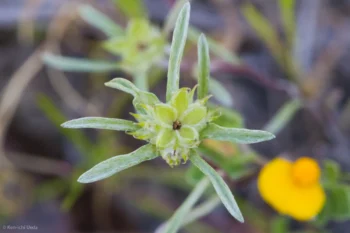
False Neststraw: A Humble Native Annual for Western Gardens
Meet false neststraw (Ancistrocarphus filagineus), one of those unassuming native plants that might not win any beauty contests but plays an important role in the western American landscape. This small annual forb belongs to the sunflower family and represents the kind of understated native that serious wildlife gardeners have come to appreciate.
What Exactly Is False Neststraw?
False neststraw is an annual forb, meaning it’s a non-woody plant that completes its entire life cycle in one growing season. Like other forbs, it lacks significant woody tissue and dies back completely each year, relying on seeds to continue the next generation. The plant gets its common name from its somewhat nest-like appearance when the woolly stems and leaves cluster together.
You might also encounter this plant listed under its former scientific names, including Stylocline filaginea, though Ancistrocarphus filagineus is the currently accepted botanical name.
Where False Neststraw Calls Home
This native plant naturally occurs across four western states: California, Idaho, Nevada, and Oregon. It’s perfectly adapted to the dry, often challenging conditions of the American West, making it a true regional specialist.
- Species observed
- No observations
Should You Plant False Neststraw?
Let’s be honest – false neststraw isn’t going to be the showstopper of your garden. This is a plant for gardeners who value ecological function over flashy flowers. Here’s what you need to know:
The Pros:
- Truly native to the western United States
- Extremely drought tolerant once established
- Provides food for small native bees and beneficial insects
- Perfect for naturalized areas and restoration projects
- Requires virtually no maintenance
- Thrives in poor, sandy, or rocky soils where other plants struggle
The Considerations:
- Very small and inconspicuous – not a dramatic visual impact
- Annual lifecycle means it disappears each year
- Limited ornamental appeal compared to showier natives
- May not be readily available in nurseries
Growing False Neststraw Successfully
If you’re intrigued by this humble native, here’s how to give it the best chance in your garden:
Ideal Growing Conditions:
- Sunlight: Full sun exposure
- Soil: Well-draining, sandy, or rocky soils
- Water: Very low water requirements; drought tolerant
- Climate: USDA zones 7-10
Planting and Care Tips:
- Direct seed in fall for best germination rates
- Scatter seeds in areas where you want naturalized growth
- Avoid overwatering – this plant actually prefers dry conditions
- No fertilizer needed; it thrives in poor soils
- Allow plants to go to seed to ensure next year’s population
- Perfect for xeriscaping and low-maintenance garden areas
The Role of False Neststraw in Your Landscape
Think of false neststraw as nature’s ground cover for tough spots. It works beautifully in:
- Native plant gardens focused on local ecosystems
- Restoration and revegetation projects
- Rock gardens and xeriscapes
- Naturalized meadow areas
- Slopes and areas with poor soil
Supporting Local Wildlife
While false neststraw might look modest, it serves as an important food source for small native bees and other beneficial insects. These pollinators depend on native plants like false neststraw, especially in areas where non-native plants dominate the landscape.
The Bottom Line
False neststraw isn’t for every garden or every gardener. But if you’re working on habitat restoration, creating a truly native western garden, or simply want to support local ecosystems with minimal effort, this unassuming annual deserves consideration. It represents the kind of plant that quietly does its job – surviving in tough conditions, feeding native insects, and maintaining the genetic diversity that makes western ecosystems resilient.
Sometimes the most valuable plants are the ones that don’t ask for attention – they just show up, do their work, and remind us that not every garden plant needs to be a prima donna to earn its place.