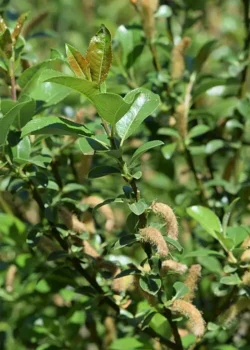
Farr’s Willow: A Hardy Native Shrub for Wet Areas
If you’ve been struggling with that persistently soggy spot in your yard, meet your new best friend: Farr’s willow (Salix farriae). This tough little native shrub thrives where many other plants would throw in the towel, making it a gardener’s secret weapon for challenging wet conditions.
What is Farr’s Willow?
Farr’s willow is a perennial, multi-stemmed woody shrub that typically stays under 13-16 feet tall. Like most willows, it’s built for life in wet places – and boy, does it deliver on that promise! This native North American species belongs to the extensive willow family, bringing all the classic willow charm in a more compact package.
You might also see this plant listed under its scientific synonyms, including Salix farriae var. microserrulata or Salix hastata var. farriae, but don’t let the name variations confuse you – it’s all the same wonderful plant.
Where Does Farr’s Willow Call Home?
This hardy native has quite the impressive range across northern and western North America. You’ll find Farr’s willow naturally growing in Alberta, British Columbia, Yukon, Northwest Territories, Idaho, Montana, Oregon, Washington, and Wyoming. It’s perfectly at home in both Canada and the lower 48 states, having adapted to some pretty challenging climates over thousands of years.
- Species observed
- No observations
Why Your Garden Will Love Farr’s Willow
Here’s where things get exciting for gardeners dealing with wet conditions. Farr’s willow has an Obligate Wetland status across multiple regions, which is fancy talk for this plant absolutely loves wet feet. While most shrubs would sulk or die in consistently moist soil, Farr’s willow practically does a happy dance.
Perfect Spots for Planting
Farr’s willow shines in several garden scenarios:
- Rain gardens and bioswales
- Pond or stream edges
- Low-lying areas that stay moist
- Naturalized wetland landscapes
- Erosion control on slopes near water
Growing Conditions and Care
The beauty of native plants like Farr’s willow is that they’re already perfectly adapted to local conditions. This shrub thrives in USDA hardiness zones 2-6, making it incredibly cold-hardy. It prefers full sun to partial shade and, as we’ve established, loves consistently moist to wet soil.
The best part? Once established, Farr’s willow is remarkably low-maintenance. It doesn’t need fancy fertilizers or constant attention – just keep it adequately watered (which shouldn’t be hard if you’ve planted it in an appropriately wet spot).
Planting and Care Tips
- Plant in spring or early fall for best establishment
- Ensure consistent moisture, especially during the first growing season
- Mulch around the base to retain soil moisture
- Minimal pruning required – just remove dead or damaged branches
- Allow plenty of space for the multi-stemmed growth habit
Wildlife and Pollinator Benefits
Like most native willows, Farr’s willow is an early-season superstar for pollinators. Its catkins provide crucial nectar when few other plants are blooming, supporting native bees, butterflies, and other beneficial insects. The shrub also offers nesting sites and cover for various wildlife species, making it a valuable addition to any wildlife-friendly landscape.
Is Farr’s Willow Right for Your Garden?
If you have a wet area that needs a hardy, native solution, Farr’s willow could be perfect. It’s especially valuable for gardeners interested in supporting local ecosystems, managing stormwater naturally, or creating habitat for native wildlife.
However, if you’re looking for a shrub for dry, well-drained areas, you’ll want to look elsewhere. This plant’s superpower is thriving in wet conditions – put it in a dry spot, and it won’t be happy.
For gardeners in its native range dealing with challenging wet conditions, Farr’s willow offers an attractive, low-maintenance solution that supports local wildlife while solving a common landscape challenge. Sometimes the best plants are the ones that have been quietly growing in your region for millennia – they just know what they’re doing.