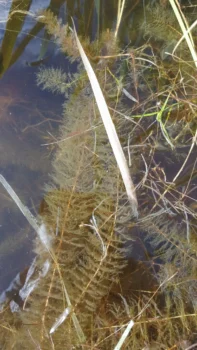
Farwell’s Watermilfoil: A Native Aquatic Gem for Water Gardens
If you’re looking to add authentic native character to your water feature, Farwell’s watermilfoil (Myriophyllum farwellii) might just be the perfect choice. This delicate aquatic perennial brings a touch of wilderness elegance to ponds and water gardens while supporting local ecosystems.
What Makes Farwell’s Watermilfoil Special?
Farwell’s watermilfoil is a native North American aquatic plant that’s been quietly beautifying our continent’s waterways long before European settlement. As a perennial forb, it lacks woody stems but makes up for it with graceful, feathery underwater foliage that creates stunning textural interest beneath the water’s surface.
This plant is classified as an obligate wetland species across all regions where it grows, meaning it almost always occurs in wetlands and requires consistently wet conditions to thrive.
Where Does It Naturally Grow?
Farwell’s watermilfoil has an impressive native range that spans much of northern North America. You’ll find it naturally occurring across Canada and Alaska, as well as throughout the northern United States. Its distribution includes:
- Canadian provinces: British Columbia, Manitoba, New Brunswick, Nova Scotia, Ontario, Quebec, and Newfoundland
- Alaska
- Northern U.S. states: Connecticut, Maine, Massachusetts, Michigan, Minnesota, New Hampshire, New York, Pennsylvania, Rhode Island, Vermont, and Wisconsin
- Species observed
- No observations
Perfect for Cold-Climate Water Gardens
This hardy native thrives in USDA hardiness zones 3-7, making it an excellent choice for northern gardeners who want to incorporate native aquatics into their landscapes. Its cold tolerance is exceptional, allowing it to survive harsh winters that would kill many other water plants.
Design Ideas and Garden Applications
Farwell’s watermilfoil works beautifully in several garden settings:
- Natural ponds: Creates authentic native habitat for wildlife
- Water gardens: Adds delicate texture beneath the water surface
- Bog gardens: Thrives in consistently saturated soils
- Restoration projects: Excellent for naturalizing wetland areas
The plant’s fine, feathery foliage creates a lovely contrast against broader-leaved aquatic plants and provides natural-looking underwater forests that fish and aquatic creatures love.
Growing Conditions and Care
Success with Farwell’s watermilfoil comes down to understanding its wetland nature:
- Water requirements: Must have standing water or permanently saturated soil
- Light needs: Full sun to partial shade
- Soil: Grows well in various soil types as long as they’re consistently wet
- Depth: Can grow in shallow to moderately deep water
Planting and Maintenance Tips
Getting started with Farwell’s watermilfoil is straightforward:
- Plant in containers if you want to control spread in smaller water features
- Allow to naturalize in larger ponds for a more authentic wetland look
- The plant goes dormant in winter, so don’t worry if it seems to disappear
- Minimal maintenance required once established
- May self-seed in ideal conditions
Wildlife and Ecological Benefits
While Farwell’s watermilfoil may not be a major pollinator plant (it’s wind-pollinated with small, inconspicuous flowers), it still provides valuable ecosystem services. The dense underwater foliage creates habitat for aquatic insects and small fish, while also helping to oxygenate the water and reduce erosion.
Should You Grow Farwell’s Watermilfoil?
If you have a water feature and live within its natural range, Farwell’s watermilfoil is definitely worth considering. It’s a low-maintenance native that adds authentic character to water gardens while supporting local wildlife. The main consideration is ensuring you can provide the consistently wet conditions it requires.
This isn’t a plant for traditional flower borders or dry gardens, but for water gardeners seeking native alternatives to common aquatic plants, it’s a wonderful choice that connects your landscape to the natural heritage of North America’s northern waterways.