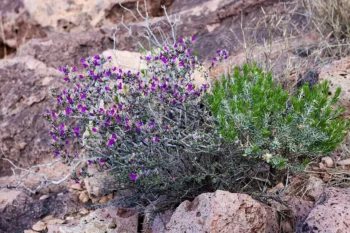
Featherplume: A Native Southwest Gem for Water-Wise Gardens
If you’re looking to add some purple pizzazz to your drought-tolerant landscape, let me introduce you to featherplume (Dalea formosa) – a charming native shrub that’s as practical as it is pretty. This unsung hero of the Southwest delivers stunning seasonal color while barely asking for a drink of water.
What is Featherplume?
Featherplume is a slow-growing perennial shrub native to the southwestern United States. True to its name, this plant produces delicate, feathery purple flower spikes that dance above silvery gray-green foliage. At maturity, it reaches about 3 feet in both height and width, making it a perfect mid-sized addition to your native plant palette.
You might also see this plant listed under its synonym Parosela formosa, but don’t let the name confusion fool you – it’s the same drought-loving darling.
Where Does Featherplume Call Home?
This native beauty naturally occurs across Arizona, Colorado, New Mexico, Oklahoma, and Texas. It’s perfectly adapted to the challenging conditions of the American Southwest, which means it can handle whatever Mother Nature throws its way in these regions.
- Species observed
- No observations
Why Your Garden Will Love Featherplume
Here’s where featherplume really shines in the landscape:
- Drought champion: With high drought tolerance and low moisture needs, this plant laughs in the face of water restrictions
- Pollinator magnet: Those purple blooms aren’t just for show – they attract native bees, butterflies, and other beneficial insects
- Low maintenance: Once established, it practically takes care of itself
- Long blooming season: Flowers appear from spring through fall, giving you months of color
- Nitrogen fixer: Like other members of the legume family, it actually improves your soil
Perfect Garden Situations
Featherplume is tailor-made for:
- Xeriscaping and water-wise gardens
- Native plant landscapes
- Desert and southwestern-style gardens
- Naturalized areas where you want low-maintenance beauty
- Mixed borders where you need reliable mid-height structure
Growing Conditions That Make Featherplume Happy
This adaptable shrub is surprisingly easy to please, but it does have some preferences:
- Sunlight: Full sun is a must – shade tolerance is basically non-existent
- Soil: Well-draining coarse to medium-textured soils work best; avoid heavy clay
- Water: Low water needs once established (12-20 inches annually)
- pH: Tolerates a range from 5.5 to 7.5
- Temperature: Hardy to about -13°F, suitable for USDA zones 6-9
- Fertility: Actually prefers poor soils – no need to pamper with fertilizers
Planting and Care Tips
Getting Started: Featherplume can be grown from seed or purchased as container plants (though you might need to special order from native plant nurseries). Plant in spring after the last frost date.
Planting: Dig a hole as deep as the root ball and twice as wide. Space plants about 3-4 feet apart to allow for mature spread.
Watering: Water regularly the first year to establish roots, then back off dramatically. This plant actually performs better with benign neglect!
Pruning: Light pruning in late winter can help maintain shape, and the plant will resprout readily if needed.
Patience is key: Remember, this is a slow grower, so don’t expect instant gratification. Good things come to those who wait!
The Bottom Line
Featherplume might not be the flashiest plant at the nursery, but it’s exactly the kind of reliable, eco-friendly performer that makes native gardening so rewarding. If you’re gardening in its native range and want a beautiful, low-maintenance shrub that supports local wildlife while conserving water, featherplume deserves a spot in your landscape. Just give it sun, decent drainage, and step back – this native knows how to take care of business.