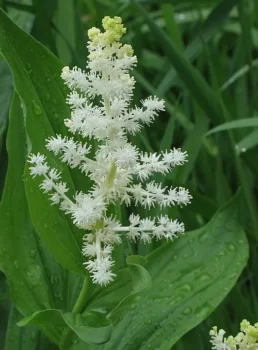
Feathery False Lily of the Valley: A Native Woodland Gem for Your Shade Garden
Looking for a charming native groundcover that thrives in those tricky shaded spots? Meet feathery false lily of the valley (Maianthemum racemosum), a delightful woodland perennial that’s been quietly beautifying North American forests for centuries. Despite its somewhat complicated name, this plant is anything but fussy – making it a perfect choice for gardeners who want native beauty without the headache.
What Makes This Plant Special?
Don’t let the false in its name fool you – there’s nothing fake about the charm of this native beauty. Feathery false lily of the valley is a herbaceous perennial forb, meaning it’s a soft-stemmed plant (no woody growth here!) that comes back year after year. Standing 1-3 feet tall, it creates lovely drifts in woodland settings with its broad, oval leaves that show off those classic parallel veins.
The real show-stopper comes in late spring to early summer when delicate white flowers appear in feathery, elongated clusters at the tips of the stems. These blooms give way to small berries that start red and mature to an attractive purple-black, providing visual interest well into fall.
Where Does It Call Home?
This plant is a true North American native with an impressive range. You’ll find Maianthemum racemosum naturally growing across Alaska, throughout Canada, and in virtually every state in the lower 48 – from Alabama to Wyoming, and everywhere in between. Talk about adaptable! Whether you’re gardening in the Pacific Northwest or the Southeast, chances are this plant originally called your area home.
- Species observed
- No observations
Its wetland status varies by region, but generally speaking, it’s quite flexible about moisture levels – it can handle both wetland and upland conditions in most areas, though it typically prefers non-wetland sites.
Why Your Garden (and Local Wildlife) Will Love It
Feathery false lily of the valley isn’t just a pretty face – it’s a hardworking member of the woodland community. The flowers attract various small pollinators including bees and flies, while the berries provide food for birds and small mammals. It’s like setting up a little wildlife café in your shade garden!
From a design perspective, this plant is a naturalist’s dream. It works beautifully as:
- Groundcover in woodland gardens
- Understory planting beneath trees
- Mass plantings in shade gardens
- Natural borders along woodland paths
- Companion planting with other native woodland species
Growing Conditions: Keep It Simple
One of the best things about feathery false lily of the valley is that it’s refreshingly low-maintenance. Here’s what it loves:
Light: Partial to full shade (though it can tolerate some morning sun)
Soil: Moist, well-draining soil with good organic content
pH: Slightly acidic conditions, but quite adaptable
Climate: Hardy in USDA zones 3-8, so it can handle everything from chilly northern winters to temperate southern conditions
Planting and Care Tips
Getting started with feathery false lily of the valley is straightforward. Plant rhizomes (underground stems) in spring or fall, spacing them about 12-18 inches apart if you want quicker coverage. The plant spreads naturally via these rhizomes, so be patient – it may start modestly but will fill in beautifully over time.
Here are some care tips to ensure success:
- Apply a 2-3 inch layer of organic mulch to retain moisture and suppress weeds
- Water regularly during the first growing season to establish roots
- Once established, it’s quite drought-tolerant (though it prefers consistent moisture)
- No need for fertilizer – it thrives in naturally rich woodland soil
- Cut back spent foliage in late fall or early spring
A Few Things to Keep in Mind
While feathery false lily of the valley is generally well-behaved, it does spread via rhizomes. This is great news if you want natural-looking drifts, but something to consider if you prefer plants that stay exactly where you put them. It’s not aggressive, but it will gradually naturalize – which is exactly what you want in a woodland setting!
The plant can adapt to various moisture conditions across different regions, from wetlands to upland areas, making it quite versatile for different garden situations.
The Bottom Line
Feathery false lily of the valley is one of those reliable native plants that delivers year after year without demanding much in return. It offers spring flowers, interesting foliage, fall berries, wildlife value, and that authentic woodland feel that’s hard to replicate with non-native alternatives. If you’re looking to create a sustainable, low-maintenance shade garden that supports local ecosystems, this native beauty deserves a spot on your plant list.
Plus, there’s something deeply satisfying about growing a plant that’s been thriving in North American woodlands long before any of us started gardening. It’s like welcoming an old friend back home.