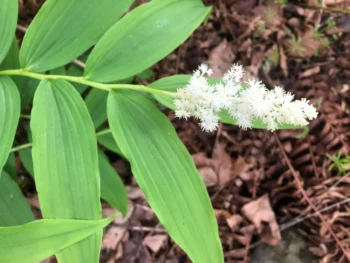
Feathery False Lily of the Valley: A Delicate Native Woodland Beauty
If you’re looking to add some understated elegance to your shade garden, the feathery false lily of the valley (Maianthemum racemosum amplexicaule) might just be the perfect native plant you’ve been searching for. This charming perennial brings a touch of woodland magic to any garden with its delicate blooms and attractive foliage.
What Makes This Plant Special?
The feathery false lily of the valley is a true North American native, naturally occurring across a impressive range from Alaska down through Canada and into 19 states across the western United States. You’ll find this beauty growing wild in places like:
- Alberta and British Columbia
- Alaska
- Western states including Arizona, California, Colorado, Idaho, Montana, Nevada, New Mexico, North Dakota, Oregon, South Dakota, Texas, Utah, Washington, and Wyoming
- Species observed
- No observations
As a native species, this plant has spent thousands of years adapting to local conditions, making it naturally resilient and well-suited to supporting local wildlife ecosystems.
Getting to Know the Plant
Botanically speaking, this perennial is classified as a forb – essentially a non-woody plant that dies back to the ground each winter and returns fresh each spring. Don’t let the scientific name intimidate you; gardeners have been enjoying plants in the Maianthemum family for generations, and this variety has quite a family tree of botanical synonyms that reflects its long history in horticulture.
The feathery part of its common name hints at the delicate, airy quality of its flower clusters, which create a lovely textural contrast in shade gardens where bold foliage often dominates.
Why Consider Adding It to Your Garden?
There are several compelling reasons to give feathery false lily of the valley a spot in your landscape:
- Native credentials: Supporting local ecosystems while reducing maintenance needs
- Shade tolerance: Perfect for those challenging darker corners of your garden
- Low maintenance: Once established, native plants typically require less water and care
- Wildlife support: Native plants provide food and habitat for local wildlife species
Growing Conditions and Care
While specific growing information for this particular variety can be limited, plants in the Maianthemum family generally prefer woodland conditions. Think about replicating the kind of environment where you’d find them naturally:
- Light: Shade to partial shade conditions work best
- Soil: Well-draining soil with good organic content
- Moisture: Consistent moisture without waterlogged conditions
- Climate: Well-adapted to its native range, likely hardy in USDA zones 3-8
Garden Design Ideas
The feathery false lily of the valley works beautifully in:
- Woodland gardens alongside ferns and other shade perennials
- Native plant gardens focusing on regional flora
- Naturalistic landscapes that mimic local ecosystems
- Shade groundcover applications where you want something more interesting than basic hostas
A Word of Caution
While this native beauty has many wonderful qualities, finding specific growing information and plant sources can be challenging since it’s a less common variety. If you’re interested in adding it to your garden, you might need to do some detective work to locate reputable native plant nurseries in your area that carry this specific variety.
Alternatively, consider looking into the more widely available Maianthemum racemosum (false Solomon’s seal), which shares many of the same wonderful characteristics and is more readily available through native plant sources.
The Bottom Line
The feathery false lily of the valley represents the kind of native plant that can add both beauty and ecological value to your garden. While it might take some effort to source, supporting native plant diversity in our gardens helps preserve these wonderful species for future generations to enjoy. Plus, there’s something deeply satisfying about growing a plant that truly belongs in your local landscape.