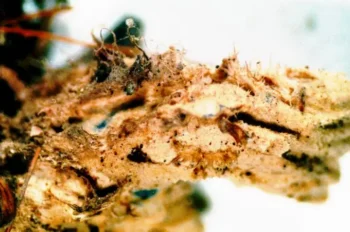
Felt Lichen: The Fascinating Partnership Living in Your Garden
Have you ever noticed those grayish-green, leafy-looking patches spreading across rocks, soil, or even old tree bark in your garden? You might be looking at felt lichen (Peltigera didactyla), one of nature’s most remarkable partnerships. While it may look like a plant, this fascinating organism is actually something quite different – and understanding what it is can help you appreciate the hidden ecosystem thriving right under your nose!
What Exactly Is Felt Lichen?
Felt lichen isn’t a plant at all – it’s a partnership! Scientifically known as Peltigera didactyla, this organism represents a symbiotic relationship between fungi and algae (or sometimes cyanobacteria). The fungal partner provides structure and protection, while the algae partner produces food through photosynthesis. It’s like having roommates who complement each other perfectly!
This native North American species has several scientific synonyms, including Peltigera canina var. spuria, Peltigera erumpens, and Peltigera spuria, which you might encounter in older field guides or scientific literature.
Where You’ll Find Felt Lichen
Felt lichen is native to North America and can be found across a wide range of climates and regions. It’s particularly common in areas with clean air and adequate moisture, making it a welcome sight in gardens and natural areas alike.
How to Identify Felt Lichen
Recognizing felt lichen is easier than you might think! Look for these distinctive characteristics:
- Grayish-green to brownish coloration
- Leafy, lobed appearance that spreads in patches
- Finger-like projections (the didactyla in its name refers to finger-like structures)
- Grows flat against surfaces like rocks, soil, or tree bark
- Feels somewhat leathery or felt-like to the touch
Is Felt Lichen Beneficial to Your Garden?
Absolutely! While you can’t plant or cultivate felt lichen like traditional garden plants, its presence is actually a wonderful sign. Here’s why you should be happy to see it:
- Air quality indicator: Lichens are sensitive to air pollution, so their presence suggests your garden has clean, healthy air
- Soil stabilization: They help prevent soil erosion on bare patches
- Ecosystem support: Lichens provide shelter and food for small insects and other tiny creatures
- Natural beauty: They add interesting textures and colors to rock gardens and natural areas
Living Alongside Felt Lichen
Since felt lichen occurs naturally and can’t be cultivated like regular plants, your role is simply to appreciate and protect it. Here are some ways to coexist happily:
- Avoid disturbing areas where lichens are growing
- Minimize the use of chemicals and fertilizers that could affect air quality
- Consider leaving some wild areas in your garden where lichens can thrive naturally
- Appreciate them as living indicators of your garden’s environmental health
The Bottom Line
Felt lichen may not be something you can add to your shopping list at the garden center, but discovering it in your outdoor spaces is like finding a hidden treasure. This remarkable organism represents millions of years of evolutionary cooperation and serves as a living testament to the health of your local environment. Instead of trying to remove or control it, consider felt lichen a fascinating neighbor that’s been quietly enriching your garden’s ecosystem all along!
Next time you’re wandering through your garden, take a moment to look for those distinctive grayish-green patches. You might just spot this amazing partnership in action, silently doing its part to keep your outdoor space healthy and vibrant.