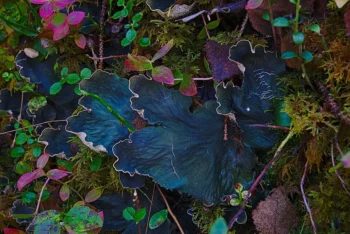
Felt Lichen: A Fascinating Forest Floor Dweller in Your Woodland Garden
Have you ever wandered through a shaded forest and noticed what looks like gray-green leafy patches scattered across the ground? Meet the felt lichen (Peltigera scabrosa), a remarkable organism that’s neither plant nor animal, but something wonderfully unique that might already be calling your woodland garden home.
What Exactly Is Felt Lichen?
Here’s where things get interesting: felt lichen isn’t actually a plant at all! It’s a lichen – a fascinating partnership between a fungus and an algae that work together to create something entirely new. Think of it as nature’s ultimate roommate situation, where both partners benefit and neither can survive without the other.
The scientific name Peltigera scabrosa might sound intimidating, but this lichen is also known by the synonym Peltigera pulverulenta. The felt in its common name perfectly describes its texture – the upper surface feels soft and fuzzy, just like felt fabric.
Where You’ll Find This Native Beauty
Felt lichen is proudly native to North America, making it a true local resident in our woodland ecosystems. You’ll find it naturally occurring across a wide range, from the boreal forests of Alaska down through temperate regions of the eastern United States.
Spotting Felt Lichen in the Wild
Identifying felt lichen is like becoming a nature detective. Here’s what to look for:
- Gray-green, leafy structures (called thalli) that spread across the ground
- A distinctive felt-like, fuzzy texture on the upper surface
- Orange-brown, finger-like projections (rhizines) on the underside
- Size ranging from a few inches to over a foot across
- Found growing on soil, moss, or decaying organic matter
Is Felt Lichen Beneficial for Your Garden?
Absolutely! While you can’t exactly plant felt lichen like you would a flower, its presence indicates a healthy, mature ecosystem. Here’s why you should celebrate finding it:
- It’s an excellent indicator of clean air quality – lichens are notoriously sensitive to air pollution
- Helps prevent soil erosion with its ground-covering growth
- Contributes to soil formation and nutrient cycling
- Provides habitat for tiny soil creatures
- Adds natural texture and color to woodland areas
Creating Conditions for Natural Colonization
You can’t buy felt lichen at the garden center or grow it from seed, but you can create conditions that might encourage it to appear naturally:
- Maintain shaded, humid areas in your landscape
- Avoid using pesticides or air-polluting practices
- Allow leaf litter and organic matter to accumulate naturally
- Protect existing mature trees and forest floor areas
- Be patient – lichen establishment takes time and specific environmental conditions
A Living Partnership Worth Protecting
Finding felt lichen in your woodland area is like discovering a small treasure. This remarkable organism represents millions of years of evolutionary cooperation, creating something beautiful and beneficial from an unlikely partnership.
Rather than trying to cultivate felt lichen, focus on protecting and preserving the conditions where it naturally thrives. By maintaining clean air, preserving woodland habitats, and allowing natural processes to unfold, you’re supporting not just felt lichen, but an entire community of fascinating forest floor organisms.
The next time you’re exploring a shaded woodland area, take a moment to appreciate these gray-green patches of felt lichen. You’re witnessing one of nature’s most successful collaborations – a partnership that’s been thriving long before humans ever thought about gardening!